
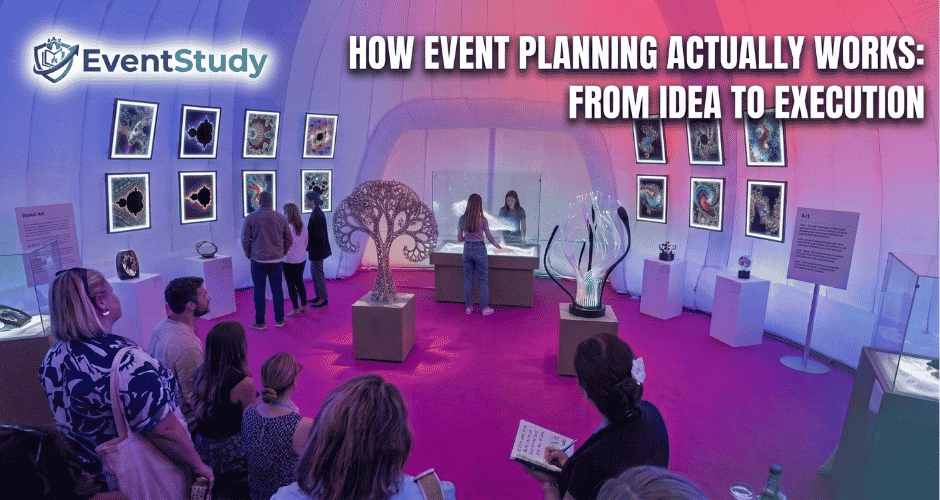
How Event Planning Actually Works: From Idea to Execution
-
July 1, 2026
-
Updated: July 20, 2026
- Event Industry Insights
Expert Summary
Every successful event—whether it’s a conference, wedding, exhibition, product launch, fundraiser, or festival—follows a structured planning process. While every event is unique, experienced event planners rely on proven frameworks to manage budgets, coordinate suppliers, minimise risks, and deliver memorable experiences.
In this guide you’ll learn:
- The complete event planning lifecycle
- What happens at each stage
- Who is responsible for different tasks
- Common mistakes to avoid
- Professional planning tips
- Tools used by experienced event planners
The event planning process follows a series of connected stages, from defining the event’s purpose to evaluating its success after it concludes. The roadmap below provides a clear overview of each step so you know what to expect throughout the planning journey.
-
Define the Event Purpose
Identify why the event is being held, who it is for, and what outcomes you want to achieve.↓
-
Set Objectives and Budget
Establish measurable goals, estimate costs, allocate resources, and create a realistic budget.↓
-
Build the Planning Timeline
Develop a detailed schedule with key milestones, deadlines, and responsibilities for every stage of the project.↓
-
Choose the Venue
Select a venue that matches your capacity, accessibility, technical, and logistical requirements.↓
-
Secure Suppliers
Book vendors, caterers, entertainment, production teams, and other service providers while confirming contracts and delivery schedules.↓
-
Develop the Event Programme
Finalise the agenda, speakers, entertainment, activities, and attendee experience.↓
-
Promote the Event
Launch marketing campaigns through websites, email, social media, advertising, and ticketing platforms to attract attendees.↓
-
Coordinate Logistics
Manage transportation, equipment, staffing, registration, signage, security, venue setup, and contingency planning.↓
-
Deliver the Event
Execute the event, monitor operations, solve issues quickly, and ensure everything runs according to plan.↓
-
Evaluate Results and Lessons Learned
Review attendance, budget performance, attendee feedback, stakeholder satisfaction, and key performance indicators to identify successes and opportunities for improvement.
Following this structured roadmap helps keep the planning process organised, reduces operational risks, and increases the likelihood of delivering a successful event.
Stage 1: Define the Event Purpose
Every successful event begins with a clear purpose. Defining why the event is being held provides direction for every planning decision, from budgeting and venue selection to marketing and programme development.
Business Goals
Start by identifying the primary objective of the event. Your goal might be to generate leads, increase brand awareness, launch a product, raise funds, educate attendees, celebrate achievements, or strengthen customer relationships. A clearly defined goal keeps the planning process focused.
Target Audience
Understand who will attend the event and what they expect to gain. Consider factors such as demographics, professional backgrounds, interests, and attendee needs. Knowing your audience helps shape the event format, content, and overall experience.
Success Criteria
Decide how success will be measured before planning begins. Common performance indicators include attendance numbers, ticket sales, revenue, sponsorship results, attendee satisfaction, media coverage, social media engagement, or qualified business leads.
Desired Outcomes
Think about what you want attendees to do after the event. This may include making a purchase, joining a membership, building professional connections, sharing feedback, supporting a cause, or returning for future events.
Event Format
Choose the format that best supports your objectives and audience. Depending on your goals, the event may be held in person, virtually, or as a hybrid event combining both experiences.
Questions to Ask
Before moving to the next planning stage, answer these key questions:
-
Why are we holding this event?
-
Who is attending?
-
What action should attendees take afterward?
-
How will success be measured?
Professional Insight: A clear purpose helps every later decision—from venue selection to speaker choices—stay aligned with the event’s goals. When the objective is well defined, planning becomes more efficient, resources are used more effectively, and the event is more likely to achieve meaningful results.
Stage 2: Budget and Resource Planning
A well-planned budget provides the financial foundation for a successful event. It helps organisers estimate costs, allocate resources efficiently, and make informed decisions throughout the planning process. Reviewing the budget regularly also reduces the risk of overspending.
Estimated Costs
Begin by identifying all expected expenses. Common cost categories include venue hire, catering, audiovisual equipment, entertainment, marketing, staffing, transportation, insurance, permits, and decorations. Request detailed supplier quotations to create realistic estimates.
Revenue Sources
Identify how the event will be funded. Revenue may come from ticket sales, exhibitor fees, sponsorships, merchandise, donations, grants, or internal company budgets. Estimating income early helps determine the event’s financial viability.
Sponsorship
Sponsors can significantly reduce event costs by providing financial support, products, or services. Create sponsorship packages that clearly outline branding opportunities, promotional benefits, and audience exposure to attract potential partners.
Contingency Funds
Unexpected expenses are common during event planning. Set aside 5–10% of the total budget as a contingency fund to cover unforeseen costs such as equipment replacements, weather-related changes, or last-minute staffing requirements.
Resource Allocation
Budget planning is not only about money—it also involves allocating people, equipment, time, and materials. Assign resources based on event priorities to ensure critical activities receive adequate support without exceeding the available budget.
Sample Event Budget
| Budget Category | Estimated Cost |
|---|---|
| Venue Hire | $8,000 |
| Catering | $6,000 |
| Production & AV | $3,500 |
| Marketing | $2,000 |
| Staffing | $2,500 |
| Entertainment | $1,500 |
| Insurance & Permits | $1,000 |
| Contingency Fund | $1,500 |
| Total Estimated Budget | $26,000 |
Planning Tip: Review your budget throughout the planning process—not just at the beginning. Regularly comparing estimated costs with actual spending helps identify potential overruns early, allowing you to adjust plans before they affect the event’s financial success.
Stage 3: Build the Event Timeline
An event timeline keeps the planning process organised and ensures every task is completed on schedule. By setting clear milestones, assigning responsibilities, and tracking deadlines, organisers can identify potential delays early and keep the project moving forward.
Milestones
Break the project into major planning stages with measurable milestones. These may include confirming the venue, securing suppliers, launching ticket sales, finalising the event programme, completing marketing campaigns, and conducting final rehearsals.
Deadlines
Assign realistic deadlines for every task and monitor progress regularly. Completing critical activities on time helps prevent last-minute pressure and allows sufficient time to resolve unexpected issues.
Critical Path
Identify tasks that directly affect the event’s completion. For example, the venue must be booked before confirming room layouts, and speakers should be secured before publishing the event agenda. Delays to these critical tasks can impact the entire project timeline.
Team Responsibilities
Assign every task to a specific person or department. Clearly defined responsibilities improve accountability, reduce confusion, and ensure nothing is overlooked during the planning process.
Sample Event Planning Timeline
| Time | Key Activities |
|---|---|
| 6 Months Before | Define objectives, approve budget, book venue, create planning timeline |
| 3 Months Before | Confirm suppliers, secure speakers, launch marketing campaign, open registration |
| 1 Month Before | Finalise programme, confirm logistics, recruit and train staff, review risk plans |
| 1 Week Before | Conduct venue walkthrough, test equipment, confirm supplier deliveries, hold team briefing |
| Event Day | Manage registration, supervise operations, monitor schedule, resolve issues in real time |
| Post-Event | Collect feedback, review budget, analyse KPIs, pay suppliers, document lessons learned |
Planning Tip: Review the timeline regularly and update it whenever priorities change. A well-maintained timeline helps the entire team stay aligned, meet deadlines, and deliver a smooth, successful event.
Stage 4: Venue Selection
Choosing the right venue is one of the most important decisions in event planning. The venue influences the attendee experience, event logistics, budget, and overall success. Evaluate each option carefully to ensure it meets your operational and strategic requirements.
Capacity
Select a venue that comfortably accommodates your expected number of attendees. It should provide enough space for seating, networking, exhibitors, catering, and emergency exits without feeling overcrowded or underused.
Accessibility
Ensure the venue is accessible for all attendees, including those with disabilities. Consider wheelchair access, lifts, accessible restrooms, clear signage, and compliance with local accessibility regulations.
Location
Choose a convenient location with good transport links, nearby accommodation, and easy access for attendees, suppliers, and speakers. A central location can improve attendance and simplify logistics.
Technology
Assess the venue’s technical capabilities, including Wi-Fi reliability, audiovisual equipment, power supply, presentation facilities, and internet bandwidth. Confirm these requirements during your site visit rather than assuming they are available.
Layout
The venue layout should support your event format. Review room sizes, stage placement, networking areas, registration space, breakout rooms, and attendee flow to ensure smooth operations throughout the event.
Catering
Determine whether the venue provides in-house catering or allows external caterers. Review menu options, dietary accommodations, service capacity, and any catering restrictions before signing a contract.
Sustainability
If environmental responsibility is a priority, look for venues that support sustainable practices such as energy-efficient lighting, recycling programmes, waste reduction initiatives, and locally sourced catering.
Parking
Evaluate parking availability for attendees, staff, suppliers, and speakers. If on-site parking is limited, consider nearby public parking facilities or shuttle services to improve accessibility.
Common Mistakes to Avoid
-
Booking Too Late: Delaying venue selection limits availability and often results in higher rental costs.
-
Ignoring Technical Requirements: Failing to verify internet connectivity, power capacity, or AV systems can lead to costly upgrades and operational problems.
-
Overlooking Accessibility: Neglecting accessibility requirements may reduce attendee participation and create compliance issues.
-
Failing to Inspect the Venue in Person: Photos and floor plans cannot reveal every operational detail. A site visit helps identify potential issues such as loading access, storage space, Wi-Fi coverage, noise restrictions, and emergency procedures.
Professional Insight: A venue should support your event—not force you to change your plans. Conduct a thorough site inspection, involve key stakeholders in the evaluation process, and confirm all operational requirements before signing the venue agreement.
Stage 5: Supplier Management
Suppliers play a critical role in delivering a successful event. Effective supplier management ensures every service is delivered on time, within budget, and to the required standard. Building strong relationships and maintaining clear communication helps minimise delays and operational risks.
Caterers
Caterers are responsible for food and beverage service. Confirm menus, dietary requirements, serving times, staffing levels, and setup requirements well before the event.
AV Providers
Audiovisual (AV) providers supply sound systems, lighting, projectors, LED screens, microphones, and technical support. Share your event schedule, presentation requirements, and venue specifications to ensure all equipment is compatible and tested.
Decor Companies
Decor suppliers create the event atmosphere through staging, floral arrangements, furniture, signage, and branding elements. Review design concepts early and confirm installation and removal schedules.
Security
Security teams manage access control, crowd safety, emergency response, and asset protection. Discuss staffing levels, emergency procedures, entry points, and communication protocols before event day.
Entertainment
Bands, DJs, speakers, performers, and presenters should receive detailed schedules, technical requirements, rehearsal times, and arrival instructions. Regular communication helps avoid last-minute changes.
Photographers
Professional photographers and videographers capture key moments throughout the event. Provide a shot list, event timeline, branding guidelines, and priority moments to ensure important content is documented.
Registration Providers
Registration providers manage ticketing, attendee check-in, badge printing, and data collection. Confirm registration procedures, equipment requirements, staffing, and backup plans before the event begins.
Best Practice
Use written agreements with every supplier that clearly define:
-
Scope of services and deliverables
-
Project timelines and delivery schedules
-
Payment terms and invoicing dates
-
Cancellation and refund clauses
-
Roles, responsibilities, and points of contact
-
Service standards and performance expectations
Professional Insight: Strong supplier relationships are built on clear expectations, regular communication, and thorough documentation. Confirm key details throughout the planning process and conduct final checks before the event to ensure every supplier is fully prepared.
Stage 6: Marketing and Guest Registration
Marketing and guest registration work together to attract attendees and provide a smooth registration experience. An effective strategy builds awareness, encourages registrations, and keeps attendees informed before, during, and after the event.
Invitations
Create professional invitations that clearly communicate the event’s purpose, date, time, location, registration details, and key benefits. Send invitations early and tailor messaging to different audience groups where appropriate.
Event Websites
A dedicated event website serves as the central source of information. It should include the event agenda, speaker profiles, venue details, FAQs, registration links, contact information, and any important updates.
Email Campaigns
Email marketing helps nurture attendees throughout the planning process. Send announcements, registration confirmations, event updates, reminder emails, and post-event follow-ups to keep participants engaged.
Social Media
Promote the event through social media channels by sharing speaker announcements, behind-the-scenes content, countdowns, attendee testimonials, and important event updates. Encourage attendees and sponsors to share content to expand your reach.
Paid Advertising
Use targeted advertising through search engines and social media platforms to increase visibility and reach audiences beyond your existing network. Monitor campaign performance to maximise return on investment.
Registration Systems
Choose a reliable registration platform that supports online registration, secure payments, ticketing, QR code check-in, automated confirmations, and attendee data management. A user-friendly registration process improves the overall attendee experience.
Reminder Communications
Maintain regular communication with registered attendees by sending reminders about event schedules, venue information, parking, travel guidance, agenda updates, and items they should bring. Timely reminders reduce no-shows and help attendees arrive prepared.
Professional Insight: Attendee communication should continue throughout the entire planning process—not just when registrations open. Consistent updates build excitement, answer questions, reduce uncertainty, and help create a seamless experience from registration through post-event follow-up.
Stage 7: Event Logistics
Event logistics focuses on coordinating the operational details that keep an event running smoothly. Careful logistical planning ensures that people, equipment, and services are in the right place at the right time while reducing the risk of delays and disruptions.
Floor Plans
Develop detailed floor plans showing the location of registration areas, stages, seating, exhibitor booths, catering stations, emergency exits, restrooms, and networking spaces. A well-designed layout improves attendee flow and operational efficiency.
Seating
Plan seating arrangements based on the event format and expected attendance. Ensure clear aisles, reserved seating where required, and accessible spaces for attendees with disabilities.
Transport
Coordinate transportation for attendees, speakers, staff, and suppliers. This may include shuttle services, parking management, delivery routes, and travel schedules to minimise congestion.
Loading Schedules
Create loading and unloading schedules for suppliers to prevent congestion at loading docks and ensure equipment arrives in the correct sequence for efficient setup.
Equipment Delivery
Confirm delivery times for audiovisual equipment, staging, furniture, decorations, and other essential materials. Check every delivery against an inventory list to ensure nothing is missing.
Signage
Install clear signage throughout the venue to direct attendees to registration, session rooms, restrooms, emergency exits, catering areas, and other key locations. Consistent branding also improves the overall attendee experience.
Staff Rotas
Prepare detailed staff schedules that outline working hours, shift changes, break times, and assigned responsibilities. Every team member should know where they need to be and when.
Accessibility
Ensure the event is accessible to all attendees by providing wheelchair access, accessible seating, clear wayfinding, appropriate restroom facilities, and any additional support services required.
Emergency Planning
Develop emergency procedures covering medical incidents, evacuations, severe weather, power outages, security issues, and communication protocols. Brief all staff on their responsibilities before the event begins.
Expert Tip: Create a detailed run sheet that outlines every activity from setup to breakdown, including timings, locations, responsible team members, supplier arrivals, speaker sessions, and contingency actions. A comprehensive run sheet serves as the operational guide for the entire event and helps every team member stay aligned throughout the day.
Stage 8: Event-Day Execution
Event day is where months of planning come together. The focus shifts from preparation to execution, ensuring every activity runs according to plan while responding quickly to any unexpected challenges.
Team Briefings
Begin the day with a briefing for all staff, volunteers, suppliers, and department leaders. Review the event schedule, individual responsibilities, emergency procedures, communication channels, and any last-minute updates.
Registration
Ensure registration desks are fully staffed and operational before attendees arrive. Monitor check-in times, assist guests with questions, and resolve registration issues quickly to create a positive first impression.
Speaker Management
Coordinate speaker arrivals, rehearsal times, presentation files, and session transitions. Keep speakers informed of the schedule and provide support throughout the event to ensure sessions begin on time.
Live Problem-Solving
Unexpected situations such as supplier delays, technical issues, weather changes, or schedule adjustments can occur at any time. Respond quickly, communicate clearly with the relevant teams, and implement contingency plans to minimise disruption.
Schedule Monitoring
Track the event timeline throughout the day to ensure sessions, performances, breaks, and activities remain on schedule. If delays occur, make adjustments while keeping attendees and stakeholders informed.
Guest Support
Provide assistance through information desks, event staff, mobile apps, or help points. Respond promptly to attendee questions, accessibility needs, and service requests to maintain a positive guest experience.
Media Coordination
Support photographers, videographers, journalists, and content creators by providing access, interview opportunities, media schedules, and designated work areas. Ensure key event moments are captured for future marketing and reporting.
Professional Insight: Flexibility is essential on event day. Even with detailed planning, unexpected issues can arise. Successful event managers remain calm, communicate effectively, and adapt quickly to keep the event running smoothly while maintaining a positive experience for attendees.
Stage 9: Post-Event Evaluation
The event planning process doesn’t end when the last attendee leaves. A structured post-event evaluation helps measure success, identify improvement opportunities, and provide valuable insights for future events.
Feedback Surveys
Collect feedback from attendees, speakers, sponsors, exhibitors, and staff through online surveys or feedback forms. Ask about event organisation, venue, programme quality, communication, and overall satisfaction to understand what worked well and what could be improved.
Budget Reconciliation
Compare actual expenses and revenue against the original budget. Review any cost variances, identify unexpected expenses, and assess whether the event achieved its financial objectives.
KPI Review
Measure performance against the key performance indicators (KPIs) established during the planning stage. These may include attendance, ticket sales, revenue, sponsorship value, lead generation, social media engagement, website traffic, or attendee satisfaction scores.
Sponsor Reporting
Prepare a post-event report for sponsors that demonstrates the value they received. Include attendance figures, branding exposure, audience demographics, marketing results, media coverage, photographs, and other agreed performance metrics.
Team Debrief
Meet with staff, volunteers, suppliers, and key stakeholders to review the event while the experience is still fresh. Discuss successes, operational challenges, and recommendations for improving future events.
Lessons Learned
Document both positive outcomes and areas for improvement. Record insights on budgeting, logistics, communication, supplier performance, technology, staffing, and attendee experience to create a valuable reference for future planning.
Professional Insight: Document improvements immediately after the event. A well-maintained lessons learned report helps future planning teams avoid repeating mistakes, build on successful strategies, and continuously improve event quality over time.
Common Challenges Throughout the Event Planning Process
Challenges can arise at every stage of event planning, from defining objectives to post-event evaluation. The key to successful event management is not avoiding every problem but preparing practical strategies that reduce their impact and keep the project on track.
Scope Changes
As planning progresses, clients or stakeholders may request additional features, services, or programme changes. While some adjustments are necessary, frequent changes can increase costs, delay timelines, and strain resources.
Prevention Strategy: Establish a clear approval process for all scope changes, document every request, and assess its impact on the budget, schedule, and resources before implementation.
Budget Overruns
Unexpected expenses, rising supplier costs, and unplanned upgrades can cause spending to exceed the approved budget.
Prevention Strategy: Monitor expenses regularly, compare actual spending with the budget, obtain competitive supplier quotes, and maintain a contingency fund of 5–10% for unforeseen costs.
Supplier Delays
Late deliveries, staffing shortages, or missed deadlines can disrupt setup and event operations.
Prevention Strategy: Confirm supplier schedules several days before the event, use written contracts with clear deliverables, maintain backup suppliers, and track deliveries using detailed checklists.
Technology Failures
Issues with sound systems, presentations, internet connectivity, registration software, or live streaming can interrupt the attendee experience.
Prevention Strategy: Test all equipment before the event, conduct technical rehearsals, prepare backup devices, and implement offline registration procedures if digital systems fail.
Communication Gaps
Miscommunication between organisers, suppliers, venue staff, and stakeholders can lead to duplicated work, missed deadlines, and operational confusion.
Prevention Strategy: Use a single communication platform, maintain shared planning documents, hold regular progress meetings, and assign one project lead to coordinate decisions and approvals.
Weather Disruptions
Outdoor events are vulnerable to rain, strong winds, extreme temperatures, and other adverse weather conditions that may affect safety and schedules.
Prevention Strategy: Monitor weather forecasts, develop contingency plans, arrange alternative indoor spaces where possible, and communicate any schedule changes to attendees promptly.
Professional Insight: Most event challenges can be minimised through early planning, clear communication, and proactive risk management. Regular reviews, documented procedures, and contingency plans allow event teams to respond quickly while keeping the event on schedule and delivering a positive attendee experience.
Professional Tools Used by Event Planners
Modern event planners rely on a variety of digital tools to streamline planning, improve collaboration, and reduce manual work. Rather than relying on a single platform, professionals typically use a combination of specialised tools throughout the event lifecycle.
Project Management Software
Project management tools help organise tasks, assign responsibilities, monitor deadlines, and track project progress. They provide a central workspace where planning teams can collaborate, share updates, and manage event timelines efficiently.
Budget Tracking Spreadsheets
Budget tracking tools allow planners to estimate costs, monitor spending, compare projected and actual expenses, and generate financial reports. Maintaining an up-to-date budget helps prevent overspending and supports better financial decision-making.
Registration Platforms
Registration systems simplify attendee management by handling event registrations, ticketing, payment processing, confirmation emails, badge generation, and check-in. Many platforms also provide attendance reports and registration analytics.
Floor Planning Tools
Floor planning software enables organisers to design venue layouts, arrange seating plans, position exhibitor booths, and optimise attendee flow. Visual layouts help identify space constraints before event setup begins.
Communication Apps
Communication platforms enable real-time collaboration between organisers, suppliers, venue teams, volunteers, and staff. Centralised messaging reduces misunderstandings, keeps everyone informed, and allows teams to respond quickly to operational changes.
CRM Systems
Customer Relationship Management (CRM) systems help organisers manage attendee, sponsor, exhibitor, and client information. They support personalised communication, track interactions, and strengthen long-term relationships beyond a single event.
Survey Tools
Survey and feedback platforms make it easy to collect opinions from attendees, speakers, sponsors, and staff after the event. Analysing this feedback helps measure satisfaction, evaluate performance, and identify opportunities for future improvement.
Professional Insight: The most successful event planners focus on building an efficient technology ecosystem rather than relying on one all-in-one solution. Choosing tools that integrate well, support collaboration, and simplify routine tasks allows teams to spend more time improving the attendee experience and less time managing administrative work.
Visual Summary: Event Planning Process
The table below summarises the key objective and primary deliverables for each stage of the event planning process.
| Stage | Main Objective | Key Deliverables |
|---|---|---|
| Define Purpose | Clarify the event’s goals and target audience | Event objectives, audience profile, success criteria |
| Budget | Allocate financial and operational resources | Budget, revenue plan, contingency fund, resource allocation |
| Timeline | Manage milestones and deadlines | Project schedule, task assignments, planning calendar |
| Venue | Secure the most suitable event location | Venue contract, site inspection, floor plan |
| Suppliers | Coordinate external service providers | Vendor agreements, delivery schedules, communication plan |
| Marketing | Attract and engage attendees | Marketing campaigns, event website, registrations, attendee communications |
| Logistics | Coordinate operational delivery | Run sheet, floor plans, staffing schedules, logistics plan |
| Event Day | Execute the event successfully | Live event delivery, issue management, attendee support |
| Evaluation | Measure performance and identify improvements | Budget reconciliation, KPI report, stakeholder feedback, lessons learned |
Key Takeaway: Every stage builds on the previous one. Defining clear objectives leads to better budgeting, effective timelines support smooth logistics, and thorough post-event evaluation provides insights that improve every future event.
Lessons Experienced Event Planners Learn
Successful event planning is built on experience as much as technical knowledge. While every event presents unique challenges, seasoned planners often rely on the same core principles to deliver consistent results. The following lessons are commonly learned through years of coordinating events of different sizes and complexities.
Decisions Made Early Have the Biggest Impact
The earliest planning decisions—such as defining the event’s objectives, selecting the venue, and establishing the budget—shape almost every aspect of the project. Making informed choices at the beginning reduces costly changes later and creates a stronger foundation for the entire planning process.
Clear Communication Prevents Last-Minute Confusion
Many event-day problems can be traced back to unclear or inconsistent communication during planning. Sharing regular updates, documenting decisions, and ensuring all stakeholders work from the same information helps prevent misunderstandings and keeps the project on schedule.
Contingency Planning Is as Important as the Primary Plan
Unexpected situations such as supplier delays, equipment failures, severe weather, or speaker cancellations are always possible. Experienced planners prepare practical backup plans alongside the main event plan so the team can respond quickly without disrupting the attendee experience.
Detailed Timelines Help Teams Stay Calm Under Pressure
A comprehensive event timeline does more than track deadlines—it provides structure when unexpected issues arise. Knowing what should happen, when it should happen, and who is responsible enables teams to make informed decisions and maintain control even in high-pressure situations.
Post-Event Reviews Drive Continuous Improvement
The most valuable lessons are often learned after the event concludes. Reviewing feedback, analysing performance data, evaluating the budget, and documenting successes and challenges creates a knowledge base that improves future events and strengthens planning processes over time.
Professional Insight: Experienced event planners understand that successful events rarely depend on a single great idea. They are the result of disciplined planning, consistent communication, thorough preparation, and a commitment to learning from every event. Small improvements made after each project often lead to significant long-term gains in efficiency, quality, and attendee satisfaction.
Conclusion
Event planning is a continuous process that begins long before guests arrive and continues after the final attendee leaves. By following a structured framework—from defining objectives and managing budgets to coordinating suppliers, delivering the event, and evaluating outcomes—organisers can reduce uncertainty and improve the likelihood of achieving their goals. The more consistently these principles are applied, the easier it becomes to deliver successful events across different formats and industries.
Frequently Asked Questions
1. What are the main stages of event planning?
The main stages typically include defining the event purpose, budgeting, building a timeline, selecting a venue, securing suppliers, marketing the event, coordinating logistics, executing the event, and conducting post-event evaluation.
2. How long does event planning usually take?
The timeline depends on the event size and complexity. Small events may require 2–3 months of planning, while large conferences, festivals, or corporate events often need 6–12 months or more to ensure all logistics, suppliers, and marketing activities are properly coordinated.
3. What is the difference between event planning and event coordination?
Event planning focuses on designing the event—setting goals, budgeting, selecting venues, and arranging suppliers. Event coordination is more operational and involves managing logistics, schedules, communication, and execution on the actual event day.
4. How much contingency should an event budget include?
Most professionals recommend setting aside 5–10% of the total budget as a contingency fund. This covers unexpected expenses such as supplier changes, equipment failures, weather disruptions, or last-minute requirements.
5. What documents should every event planner prepare?
Key documents include the event brief, budget plan, timeline or schedule, vendor contracts, risk management plan, run sheet, floor plan, communication plan, and post-event evaluation report.
6. How do event planners manage risk?
Risk is managed through early planning, detailed contingency plans, regular site inspections, supplier confirmations, staff training, and clear emergency procedures. Identifying risks early allows planners to prepare backup solutions before issues occur.
7. What skills are most important for successful event planning?
Important skills include organisation, communication, problem-solving, time management, budgeting, negotiation, leadership, and attention to detail. Adaptability is also essential for handling unexpected changes during planning and execution.
8. Why is communication so important in event planning?
Clear communication ensures that all stakeholders—clients, suppliers, staff, and venues—understand expectations, deadlines, and responsibilities. It reduces misunderstandings, prevents delays, and keeps the entire event process aligned.
9. What tools do event planners commonly use?
Event planners often use project management software, budgeting spreadsheets, registration platforms, CRM systems, floor planning tools, communication apps, and survey tools to streamline planning and improve efficiency.
10. How do event planners measure success?
Success is measured using KPIs such as attendance numbers, budget performance, attendee satisfaction, engagement levels, sponsor outcomes, and overall operational efficiency. Post-event feedback also plays a key role in evaluation.
Sign up to receive our latest updates
Get in touch
Call us directly?
020 8904 8326
Address
63 Cowcross St, Islington, London EC1M 6BP, United Kingdom
info@eventstudy.org.uk
Need some help?
Popular categories