
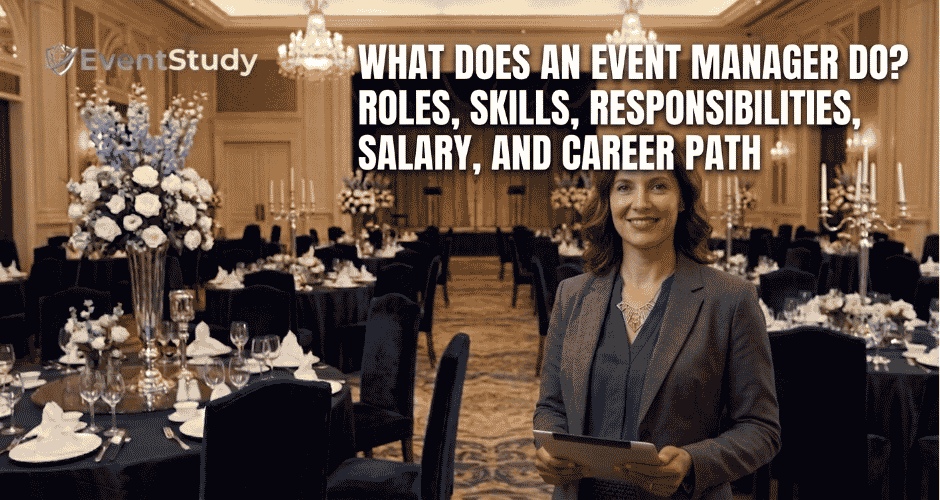
What Does an Event Manager Do? Roles, Skills, Responsibilities, Salary, and Career Path
-
June 29, 2026
-
Updated: July 20, 2026
- Event Industry Insights
An event manager is a professional responsible for planning, organising, coordinating, and overseeing events to ensure they are delivered successfully and meet the client’s objectives. Businesses hire event managers because they possess the expertise to manage budgets, schedules, venues, suppliers, marketing, and logistics while ensuring a seamless experience for attendees. Their skills help organisations save time, reduce risks, and create memorable events that enhance brand image and customer engagement.
Event managers organise a wide range of events, including corporate conferences, product launches, exhibitions, trade shows, weddings, festivals, charity fundraisers, sporting events, and private celebrations. They are employed across various industries such as hospitality, tourism, entertainment, education, healthcare, government, and corporate business, where events play a vital role in communication, marketing, and stakeholder engagement.
Event management has become a rapidly growing career due to the increasing demand for professionally organised events and the expansion of the global events industry. Advances in technology, the rise of hybrid and virtual events, and businesses’ focus on customer experience have further increased the need for skilled event managers, making it an attractive and rewarding profession.
Quick Definition Box
An event manager plans, organizes, coordinates, and executes events such as weddings, corporate conferences, exhibitions, festivals, product launches, and private celebrations while managing budgets, vendors, logistics, timelines, and guest experience.
What Is an Event Manager?
An event manager is a professional who plans, organises, and manages events to ensure they are successful. Their main objective is to coordinate people, budgets, logistics, and resources while making sure the event meets the client’s goals.
Although similar, an event planner focuses mainly on preparing the event, while an event manager oversees the entire event, including planning, execution, and post-event evaluation.
| Event Planner | Event Manager |
|---|---|
| Plans the event | Oversees execution |
| Focuses on design | Manages logistics |
| Selects vendors | Coordinates teams |
| Pre-event focus | Entire event lifecycle |
What Is an Event Manager?
An event manager is a professional who plans, organises, and manages events to ensure they are successful. Their main objective is to coordinate people, budgets, logistics, and resources while making sure the event meets the client’s goals.
Although similar, an event planner focuses mainly on preparing the event, while an event manager oversees the entire event, including planning, execution, and post-event evaluation.
| Event Planner | Event Manager |
|---|---|
| Plans the event | Oversees execution |
| Focuses on design | Manages logistics |
| Selects vendors | Coordinates teams |
| Pre-event focus | Entire event lifecycle |
What Does an Event Manager Do?
An event manager plans, organises, and manages events from start to finish. They work with clients to understand their goals, create event plans, manage budgets, book venues, and coordinate suppliers to ensure everything runs smoothly.
They also handle marketing, negotiate with vendors, manage event staff, and solve any problems that arise during the event. Their job is to keep everything on schedule while delivering a successful experience for guests and clients.
After the event, they review its success by collecting feedback, analysing costs, and identifying improvements for future events. Strong communication, organisation, leadership, and problem-solving skills are essential for an event manager to succeed.
Planning the Event
Every successful event starts with careful planning. Event managers meet with clients to understand their goals, create a realistic budget, and develop a timeline that keeps every task on schedule.
Managing Vendors
Event managers coordinate all service providers involved in the event. This includes caterers, decorators, AV teams, security staff, photographers, and other vendors. They ensure everyone delivers their services on time and meets the required standards.
Budget Management
Managing the budget is a key responsibility. Event managers estimate costs, negotiate better prices with suppliers, track expenses throughout the project, and measure the event’s return on investment (ROI) to ensure value for money.
Venue Coordination
Choosing the right venue is essential. Event managers conduct site visits, check venue capacity, review safety measures, ensure accessibility for guests, and confirm that parking and other facilities meet event requirements.
Team Leadership
An event manager leads everyone involved in the event, including staff, volunteers, vendors, and the production crew. Clear communication and teamwork help ensure everything runs smoothly.
Marketing the Event
For conferences, public festivals, and expos, event managers often support promotion. They use social media, email campaigns, and ticketing platforms to attract attendees and increase event visibility.
Managing the Event Day
On the event day, the manager oversees every activity and quickly solves unexpected problems.
Event Day Checklist
Registration and guest check-in
Speaker and performer management
Schedule monitoring
Emergency response planning
Problem solving and coordination
Post-Event Evaluation
After the event, managers collect feedback through surveys, review key performance indicators (KPIs), compare the final budget with actual spending, and identify lessons to improve future events.
Key Responsibilities of an Event Manager
An event manager handles many responsibilities to ensure every event is successful. Their main duties include:
Planning and organising the event from start to finish
Creating and managing the event budget
Coordinating vendors and suppliers
Communicating with clients and stakeholders
Developing and managing event schedules
Identifying and managing potential risks
Supervising staff, volunteers, and production teams
Supporting event marketing and promotion
Ensuring a positive guest experience
Preparing post-event reports and performance reviews
Essential Skills Every Event Manager Needs
Soft Skills
Strong soft skills help event managers work effectively with clients, teams, and guests.
Communication: Clearly share ideas and instructions.
Leadership: Guide staff, volunteers, and vendors.
Negotiation: Secure better prices and contracts.
Time Management: Keep tasks and deadlines on track.
Creativity: Design unique and memorable events.
Adaptability: Respond quickly to unexpected changes.
Technical Skills
Technical knowledge helps event managers organise events efficiently and accurately.
Budget planning and financial management
Microsoft Excel for budgets and reports
CRM systems for managing client relationships
Event management software
Scheduling and project planning
Contract preparation and vendor agreements
Digital Skills
Modern event managers use digital tools to improve planning, communication, and event delivery.
Eventbrite: Event registration and ticketing
Cvent: Event planning and attendee management
Asana: Project and task management
Trello: Team collaboration and workflow tracking
Zoom: Virtual meetings and online events
Canva: Creating promotional and event marketing materials
Types of Events Managed
| Event Type | Examples |
|---|---|
| Corporate | Conferences, seminars, product launches, business meetings |
| Weddings | Destination weddings, traditional weddings, receptions |
| Exhibitions | Trade shows, expos, industry exhibitions |
| Festivals | Music festivals, food festivals, cultural celebrations |
| Charity | Fundraisers, charity galas, awareness campaigns |
| Government | Official ceremonies, public events, national celebrations |
| Sports | Tournaments, marathons, championships, sporting events |
| Virtual | Webinars, online workshops, virtual conferences |
| Hybrid | Conferences and events that combine in-person and virtual attendance |
A Day in the Life of an Event Manager
No two days are the same for an event manager. Every day involves planning, communication, and quick decision-making to ensure events run smoothly.
Morning
↓
Review emails, schedules, and the day’s priorities.
Vendor Calls
↓
Confirm deliveries, catering, decorations, AV equipment, and other services.
Venue Inspection
↓
Check event setup, safety measures, seating, signage, and technical equipment.
Client Meetings
↓
Discuss final updates, answer questions, and confirm event requirements.
Budget Updates
↓
Track expenses, approve payments, and ensure spending stays within budget.
Problem Solving
↓
Handle last-minute changes, delays, or unexpected issues quickly and calmly.
Event Execution
↓
Supervise staff, coordinate vendors, manage the schedule, and ensure guests have a great experience.
Post-Event Reporting
Review feedback, evaluate performance, compare the final budget with actual costs, and identify improvements for future events.
Qualifications Needed
While a degree is not always required, many employers prefer candidates with qualifications in Hospitality, Marketing, Business, or Public Relations. These subjects provide knowledge of customer service, project management, communication, and business operations.
Professional certifications can improve career prospects. Popular options include event management certificates, project management certifications, and hospitality training programs. These qualifications demonstrate practical skills and industry knowledge.
Useful courses include event planning, budgeting, digital marketing, customer service, risk management, and leadership. Gaining hands-on experience through internships or volunteering at events is also highly valuable for building a successful career in event management.
Event Manager Career Path
Most event professionals progress through experience, training, and successful event delivery.
| Career Stage | Average Experience |
|---|---|
| Intern | 0–6 months |
| ↓ | |
| Event Assistant | 6 months–2 years |
| ↓ | |
| Event Coordinator | 2–4 years |
| ↓ | |
| Junior Event Manager | 4–6 years |
| ↓ | |
| Senior Event Manager | 6–10 years |
| ↓ | |
| Event Director | 10–15 years |
| ↓ | |
| Agency Owner | 10+ years (or after gaining significant industry experience) |
As event managers gain experience, they take on larger events, lead bigger teams, manage higher budgets, and may eventually start their own event management agency.
Salary of an Event Manager
| Experience | Typical Annual Salary (USD) |
|---|---|
| Entry Level (0–2 years) | $35,000–$50,000 |
| Mid Level (3–5 years) | $50,000–$75,000 |
| Senior Level (6–10 years) | $75,000–$100,000+ |
| Event Director (10+ years) | $100,000–$150,000+ |
Event manager salaries vary depending on several factors. These include the country where they work, the industry (such as corporate, hospitality, or entertainment), their qualifications and certifications, and the size of the company. Income can also differ between freelance event managers, who are paid per project, and those working for an agency or organisation, who usually receive a fixed salary and employee benefits.
Industries That Hire Event Managers
Event managers are employed across many industries to plan and deliver successful events. Some of the most common employers include:
Hotels: Weddings, conferences, and banquets
Corporations: Business meetings, product launches, and corporate events
NGOs: Charity events, fundraisers, and awareness campaigns
Universities: Graduation ceremonies, seminars, and student events
Sports Organizations: Tournaments, competitions, and sporting events
Government: Official ceremonies, public events, and national celebrations
Entertainment: Concerts, award shows, and festivals
Tourism: Destination events, travel expos, and cultural festivals
Healthcare: Medical conferences, workshops, and health campaigns
Luxury Brands: Fashion shows, VIP events, and exclusive product launches
Common Challenges Event Managers Face
Budget Cuts
Problem
↓
Reduced funding can affect the quality or size of the event.
How professionals solve it
Prioritise essential services, renegotiate vendor contracts, and find cost-effective alternatives.
Last-Minute Cancellations
Problem
↓
Speakers, vendors, or performers may cancel unexpectedly.
How professionals solve it
Maintain backup suppliers and speakers, and have contingency plans ready.
Bad Weather
Problem
↓
Outdoor events may be disrupted by rain, wind, or extreme temperatures.
How professionals solve it
Arrange indoor backup venues, provide weather protection, and monitor forecasts in advance.
Vendor Issues
Problem
↓
Late deliveries or poor-quality services can delay the event.
How professionals solve it
Work with reliable vendors, confirm details early, and keep backup suppliers available.
Technical Failures
Problem
↓
Audio, lighting, internet, or presentation equipment may stop working.
How professionals solve it
Test equipment before the event and have technical support and backup systems on site.
Guest Complaints
Problem
↓
Attendees may experience registration delays, seating issues, or service problems.
How professionals solve it
Respond quickly, communicate clearly, and resolve issues professionally to maintain a positive guest experience.
Event Manager vs Event Coordinator
| Aspect | Event Manager | Event Coordinator |
|---|---|---|
| Responsibilities | Plans, manages, and oversees the entire event | Coordinates daily tasks and supports event execution |
| Authority | Has overall responsibility and supervises the event team | Reports to the event manager and follows assigned tasks |
| Experience | Usually 3–5+ years of industry experience | Typically 0–3 years of experience |
| Salary | Higher salary due to greater responsibility | Lower salary at an entry- or mid-level position |
| Decision-Making | Makes strategic decisions on budgets, vendors, and event planning | Handles operational decisions and escalates major issues to the event manager |
Pros and Cons of Becoming an Event Manager
| Pros | Cons |
|---|---|
| Creative and rewarding work with new challenges | Long working hours, especially during events |
| High demand across many industries | Weekend and holiday work is often required |
| Opportunities to travel for events | High-pressure environment with tight deadlines |
| Build a strong professional network | Managing unexpected crises and last-minute changes |
| Variety of projects with no two events being the same | Balancing multiple tasks and clients can be stressful |
Future Trends in Event Management (2026 and Beyond)
The event management industry is evolving rapidly as technology and attendee expectations continue to change. Future event managers will rely more on digital tools to improve planning, reduce costs, and create engaging experiences.
AI-Powered Event Planning: AI helps automate scheduling, attendee matching, budgeting, and customer support.
Hybrid Events: Combining in-person and virtual audiences allows events to reach more people worldwide.
Sustainable Events: Businesses are reducing waste by using digital tickets, reusable materials, and eco-friendly venues.
Data-Driven Personalization: Event data is used to recommend sessions, networking opportunities, and personalised content.
Contactless Check-In: QR codes, facial recognition, and mobile passes speed up registration and improve security.
Event Apps: Mobile apps provide schedules, maps, live updates, networking features, and digital tickets.
Automation: Automated emails, registrations, reminders, and reporting save time and improve efficiency.
AR/VR Experiences: Augmented and virtual reality create interactive product demonstrations, virtual exhibitions, and immersive attendee experiences.
Event managers who develop digital skills and embrace new technology will be better prepared for the future of the industry.
Frequently Asked Questions
1. What qualifications do event managers need?
Many employers prefer a degree in hospitality, business, marketing, or public relations. Certifications and practical experience are also valuable.
2. Is event management a good career?
Yes. It offers creative work, career growth, networking opportunities, and strong demand across many industries.
3. Do event managers travel?
Yes. Some roles require travel to venues, conferences, festivals, or destination events.
4. Is event management stressful?
It can be, especially during large events and tight deadlines. Strong planning and problem-solving skills help manage the pressure.
5. Can I become an event manager without a degree?
Yes. Many professionals enter the industry through internships, volunteer work, certifications, and hands-on experience.
6. What software do event managers use?
Common tools include Eventbrite, Cvent, Asana, Trello, Zoom, Microsoft Excel, Canva, and CRM software.
7. What’s the difference between an event planner and an event manager?
An event planner focuses on designing and organising the event, while an event manager oversees the entire event and manages its execution.
8. How long does it take to become an event manager?
Most professionals become event managers after gaining 3–5 years of experience in roles such as Event Assistant or Event Coordinator.
9. What industries hire event managers?
Hotels, corporations, universities, NGOs, government agencies, healthcare organisations, sports organisations, and entertainment companies all hire event managers.
10. What skills are most important for an event manager?
Communication, leadership, organisation, budgeting, negotiation, time management, and problem-solving are essential for success.
Conclusion
Event managers play a vital role in planning, organising, and delivering successful events. Their responsibilities include budgeting, vendor coordination, client communication, team leadership, risk management, and ensuring every event runs smoothly from start to finish. To succeed, they need a combination of communication, leadership, organisation, creativity, and technical skills.
With opportunities across industries such as hospitality, business, healthcare, tourism, government, and entertainment, event management offers a rewarding and growing career path. As technology continues to transform the events industry, the demand for skilled professionals is expected to remain strong.
If you’re interested in becoming an event manager, consider gaining practical experience, enrolling in relevant training courses, or earning professional certifications. Building the right skills and qualifications can help you start a successful career in this dynamic and exciting industry.
Sign up to receive our latest updates
Get in touch
Call us directly?
020 8904 8326
Address
63 Cowcross St, Islington, London EC1M 6BP, United Kingdom
info@eventstudy.org.uk
Need some help?
Popular categories