
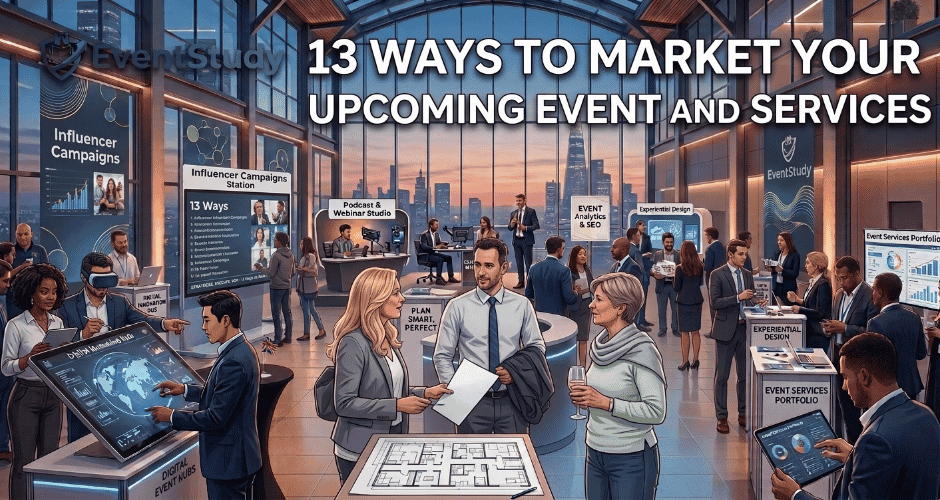
13 Ways to Market Your Upcoming Event and Services
-
May 14, 2026
-
Updated: July 20, 2026
- Event Industry Insights
Success in the modern events industry requires a strategic blend of digital outreach and traditional networking. Organizers often struggle to cut through the digital noise to reach their target audience effectively. Planning a great event is only half the battle. You must also implement a marketing strategy that drives ticket sales and builds genuine excitement.
High attendance numbers depend on consistent messaging across multiple platforms. This guide explores the most effective ways to market your function in 2026. These methods ensure your brand reaches the right people at the right time. Strategic promotion turns a quiet gathering into a sold-out success.
The 5 Pillars of Event Marketing
Successful event marketing goes beyond promoting an event—it focuses on attracting the right audience, delivering value, and building long-term relationships. These five pillars provide a framework for planning and executing effective event marketing campaigns.
| Pillar | Purpose | Key Actions |
|---|---|---|
| Audience | Identify and understand your target attendees | Create attendee personas, segment audiences, and understand their needs |
| Offer | Develop a compelling reason to attend | Highlight the event’s value, speakers, experiences, and exclusive benefits |
| Channels | Promote the event through the right platforms | Use email marketing, social media, SEO, paid advertising, and partnerships |
| Conversion | Turn interest into registrations | Optimise landing pages, simplify registration, and include strong calls to action |
| Retention | Build lasting relationships after the event | Send follow-up emails, share event content, collect feedback, and encourage repeat attendance |
13 Practical Ways to Promote an Event
Advertising an event successfully requires a mix of digital marketing and direct promotion. Every promotional activity should serve the ultimate goal of conversion. You must understand where your audience spends their time online. Effective promotion begins with a central hub for all event information.
1. Utilize Search Engine Optimization (SEO)
Search engine optimisation (SEO) helps potential attendees discover your event through organic search results. Optimise your event page using relevant keywords related to your event type, industry, and location. Create descriptive page titles, compelling meta descriptions, structured headings, and valuable supporting content to improve visibility. Publishing blog posts, speaker interviews, and event guides before the event can also increase traffic. Strong SEO provides long-term visibility and continues attracting visitors without relying entirely on paid advertising.
2. Leverage Social Media Marketing
Social media platforms provide an effective way to build awareness before your event while engaging directly with potential attendees. Share promotional videos, speaker announcements, countdown posts, behind-the-scenes updates, polls, and attendee testimonials to maintain interest. Combine organic content with paid advertising to reach highly targeted audiences based on location, interests, job titles, or behaviours. Consistent posting helps keep your event visible throughout the marketing campaign.
3. Engage Public Relations (PR)
Public relations helps increase credibility by earning coverage from trusted media sources rather than relying solely on advertising. Prepare professional press releases announcing keynote speakers, partnerships, charitable initiatives, or unique event features. Contact local newspapers, industry publications, radio stations, podcasts, bloggers, and online magazines that serve your target audience. Positive media coverage expands your reach while strengthening your event’s reputation.
4. Collaborate with Industry Influencers
Influencer partnerships allow you to introduce your event to audiences that already trust the creator’s recommendations. Choose influencers whose followers closely match your target attendees rather than focusing only on follower numbers. Collaborations may include event previews, interviews, livestreams, social media posts, guest articles, or exclusive discount codes. Authentic partnerships often generate stronger engagement than traditional advertising.
5. List Your Event on Event Directories
Many people discover events through online directories and local event listings rather than searching directly. Submitting your event to platforms such as Eventbrite, Meetup, AllEvents, Event Listings, tourism websites, and local business directories increases your visibility across multiple channels. These listings often improve search engine rankings through valuable backlinks while exposing your event to audiences actively looking for activities.
6. Create a High-Converting Landing Page
Your landing page serves as the central hub for all event information and should answer every important question a visitor may have. Clearly explain who the event is for, what attendees will learn or experience, when and where it takes place, and why it is worth attending. Include compelling headlines, speaker profiles, testimonials, pricing information, FAQs, and highly visible registration buttons. A fast-loading, mobile-friendly page significantly improves conversion rates.
7. Announce Speakers Early
Recognised speakers often become one of the strongest reasons people choose to attend an event. Introduce keynote speakers gradually throughout your campaign to maintain excitement and create multiple promotional opportunities. Share speaker biographies, presentation topics, interviews, short videos, and social media clips to demonstrate the value attendees will receive. Each announcement creates fresh content while reinforcing your event’s credibility.
8. Showcase Testimonials
Testimonials provide valuable social proof by demonstrating that previous attendees enjoyed the event and found it worthwhile. Include written reviews, video testimonials, case studies, star ratings, and success stories throughout your website and marketing materials. Real attendee experiences help reduce uncertainty, increase trust, and encourage hesitant visitors to register.
9. Share Behind-the-Scenes Content
Behind-the-scenes content makes your event feel more personal while building anticipation before the event takes place. Share venue walkthroughs, stage construction, supplier preparations, team meetings, speaker rehearsals, decoration progress, and production setup across social media. Giving audiences a preview of the planning process creates excitement while demonstrating the effort invested in delivering a high-quality event.
10. Publish Frequently Asked Questions (FAQs)
An informative FAQ section removes common barriers that prevent people from registering. Answer questions about ticket pricing, parking, accessibility, accommodation, refunds, schedules, dietary requirements, dress codes, networking opportunities, and venue facilities. Providing clear answers improves user experience while reducing enquiries to your support team.
11. Launch Targeted Email Campaigns
Email marketing remains one of the highest-performing channels for converting interested prospects into registered attendees. Segment your audience based on previous attendance, interests, industry, or registration status to deliver more personalised messages. Send invitations, speaker updates, reminder emails, countdown campaigns, and final registration notices to maintain engagement throughout the promotional period.
12. Offer Early-Bird Pricing
Early-bird pricing encourages people to register before the standard ticket price becomes available. Limited-time discounts create urgency while rewarding attendees who commit early. This strategy helps generate initial ticket sales, improves cash flow, and creates positive momentum that supports the remainder of the marketing campaign.
13. Introduce Referral Incentives
Referral programmes encourage attendees to promote your event within their own professional and personal networks. Offer rewards such as discounted tickets, merchandise, exclusive networking sessions, or complimentary upgrades for successful referrals. Since recommendations from friends and colleagues carry high levels of trust, referral marketing often delivers strong conversion rates.
14. Use Retargeting Advertisements
Not every visitor registers during their first visit to your event website. Retargeting advertisements remind previous visitors about your event while they browse other websites or social media platforms. Displaying tailored advertisements featuring countdowns, testimonials, limited-time offers, or speaker announcements helps bring potential attendees back to complete their registration.
15. Send Thank-You Emails
Communication should continue after the event concludes. Sending personalised thank-you emails shows appreciation while strengthening long-term relationships with attendees. Include presentation slides, downloadable resources, certificates, event photos, sponsor offers, and information about future events to maintain engagement beyond the event itself.
16. Share Event Recap Videos
Recap videos allow attendees to revisit memorable moments while introducing future audiences to the quality of your events. Highlight keynote presentations, networking sessions, audience reactions, entertainment, and behind-the-scenes footage in a professionally edited video. These videos become valuable promotional assets for future event marketing campaigns.
17. Collect Post-Event Surveys
Post-event surveys provide valuable insights into attendee satisfaction and event performance. Ask participants about registration, venue, speakers, networking opportunities, technology, catering, organisation, and overall experience. Analysing this feedback helps identify strengths, resolve weaknesses, and improve future events while demonstrating that attendee opinions are valued.
18. Build an Ongoing Community
The relationship with attendees should continue long after the event finishes. Create opportunities for ongoing engagement through LinkedIn groups, private communities, newsletters, webinars, networking events, and exclusive member content. Building an active community encourages repeat attendance, strengthens brand loyalty, and transforms one-time attendees into long-term advocates for future events.
Event Marketing Timeline
A well-planned marketing timeline ensures promotional activities are launched at the right time, building awareness early, driving registrations consistently, and maintaining engagement after the event. Use the following timeline as a guide for planning your event marketing campaign.
| Time Before Event | Marketing Focus | Key Activities |
|---|---|---|
| 6 Months | Branding & Planning | Finalise branding, launch the event website or landing page, announce the event, confirm keynote speakers, and create the marketing strategy. |
| 4 Months | Build Awareness | Publish SEO content, optimise the website, distribute press releases, list the event on directories, and begin content marketing campaigns. |
| 3 Months | Expand Reach | Launch paid social media campaigns, collaborate with influencers, announce additional speakers, publish videos, and grow email subscribers. |
| 2 Months | Drive Registrations | Send targeted email campaigns, host webinars or live sessions, promote testimonials, launch referral programmes, and encourage early-bird registrations before prices increase. |
| 1 Month | Increase Urgency | Share countdown posts, behind-the-scenes content, venue updates, FAQs, retargeting advertisements, and final speaker announcements to maximise registrations. |
| Event Week | Maximise Attendance | Send reminder emails, share live updates on social media, publish attendee information, encourage user-generated content, and provide real-time event announcements. |
| After the Event | Retain & Nurture | Send thank-you emails, distribute surveys, publish recap videos and photo galleries, share presentation materials, nurture leads, and promote future events. |
Event Marketing Channel Comparison
Every marketing channel offers different advantages depending on your budget, objectives, and timeline. Comparing channels helps organisers choose the right mix of promotional activities to maximise registrations and return on investment.
| Marketing Channel | Cost | Best For | Speed | ROI Potential |
|---|---|---|---|---|
| Email Marketing | Low | Existing audience and attendee retention | Fast | High |
| SEO | Low | Long-term organic traffic and event discovery | Slow | High |
| Paid Search (PPC) | Medium | High-intent users actively searching for events | Fast | High |
| Social Media Ads | Medium | Brand awareness, audience targeting, and ticket sales | Fast | Medium |
| Influencer Marketing | Variable | Building trust, expanding reach, and social proof | Medium | Medium–High |
| Public Relations (PR) | Low | Credibility, media coverage, and brand awareness | Medium | Medium |
| Event Directories | Low | Increasing online visibility and local discovery | Fast | Medium |
| Content Marketing | Low | Educating audiences and improving SEO | Slow | High |
| Referral Programmes | Low | Word-of-mouth marketing and attendee acquisition | Medium | High |
| Partnerships & Associations | Low–Medium | Reaching niche or professional audiences | Medium | High |
Comparing marketing channels enables event organisers to allocate budgets more effectively, balance short-term and long-term strategies, and build an integrated marketing campaign that delivers the highest return on investment.
Why Is Defining a Target Audience Crucial?
Identifying exactly who the event is for allows you to tailor your messaging effectively. Generic marketing often fails because it tries to appeal to everyone. Specific messaging speaks directly to the pain points or interests of your ideal guest. You should create an “attendee persona” before starting any promotional work.
This persona guides your choice of social platforms and the tone of your content. Understanding your audience ensures that every pound spent on ads is used efficiently. Targeted outreach leads to higher conversion rates and better attendee satisfaction.
Explore social event coordination in the UK with Event Study, covering client communication, event logistics, guest experience, and successful social event planning.
How Do You Measure Promotion Success?
Data allows you to monitor your campaign’s performance and adjust your strategies. You should track metrics like click-through rates, conversion rates, and the source of each ticket sale. Google Analytics can show you which websites are sending the most traffic to your page.
If a particular social ad is not performing, you can stop it and reinvest the budget elsewhere. Measuring results during the campaign prevents you from wasting money on ineffective tactics. Post-event analysis helps you improve your strategy for the following year.
Key Event Marketing Metrics
| Metric | What It Measures | Why It Matters |
|---|---|---|
| Landing Page Conversion Rate | Percentage of website visitors who complete registration | Indicates how effectively your event page converts interest into registrations. A low conversion rate may suggest unclear messaging, weak calls to action, or a complicated booking process. |
| Ticket Sales by Channel | Registrations generated from each marketing source | Shows which channels—such as email, SEO, paid search, social media, referrals, or event directories—are driving the most ticket sales, helping you prioritise high-performing channels. |
| Cost per Registration (CPR) | Marketing spend divided by the number of registrations | Measures how much it costs to acquire each attendee. Comparing CPR across channels helps determine where your advertising budget delivers the greatest value. |
| Email Open Rate | Percentage of recipients who open your emails | Reflects the effectiveness of your subject lines, sender reputation, and audience targeting. Low open rates may indicate that emails are not attracting attention. |
| Email Click-Through Rate (CTR) | Percentage of recipients who click links in your emails | Demonstrates how engaging your email content is and whether recipients are interested enough to learn more or register. |
| Advertising Return on Investment (ROI) | Revenue generated compared with advertising costs | Helps determine whether paid campaigns are profitable. A strong ROI indicates that advertising spend is generating meaningful ticket sales. |
| Social Media Engagement | Likes, comments, shares, saves, and video views | Measures audience interest and content quality. High engagement often increases organic reach and strengthens brand awareness before the event. |
| Referral Conversions | Registrations generated through referral or affiliate links | Evaluates the success of referral programmes, influencer partnerships, and ambassador campaigns by showing how many attendees were acquired through recommendations. |
| Organic Search Traffic | Visitors arriving through unpaid search engine results | Indicates how well your SEO strategy is performing. Growth in organic traffic suggests that your event pages and supporting content are becoming more visible in search engines. |
How to Interpret Your Results
Collecting numbers is only the first step. The real value comes from understanding what those numbers mean and using them to improve your marketing strategy.
- High website traffic but low registrations usually indicates that your landing page needs improvement. Simplifying the registration process, strengthening calls to action, or clarifying the event’s value proposition can improve conversion rates.
- High email open rates but low click-through rates suggest that your subject lines are effective, but the email content or offer is not compelling enough to encourage action.
- Strong social engagement with few ticket sales often means your content is generating awareness but not conversions. Include clearer registration links, limited-time offers, or stronger calls to action.
- A high cost per registration may indicate that paid advertising is targeting the wrong audience or that campaign creatives need optimisation.
- Low organic search traffic suggests opportunities to improve SEO by targeting more relevant keywords, publishing helpful supporting content, and enhancing on-page optimisation.
- Referral programmes producing high conversion rates demonstrate the value of word-of-mouth marketing, making them a strong candidate for increased investment in future campaigns.
Reviewing these metrics regularly—rather than waiting until after the event—allows organisers to make timely adjustments that improve registrations, maximise marketing efficiency, and achieve a higher overall return on investment.
Common Event Marketing Mistakes to Avoid
Even well-planned events can struggle to attract attendees if common marketing mistakes undermine the campaign. Successful event promotion is not only about choosing the right marketing channels—it also requires consistent planning, audience targeting, and continuous optimisation. Avoiding the following mistakes can significantly improve registrations, attendee engagement, and overall return on investment.
1. Launching Promotion Too Late
One of the most common mistakes is delaying promotional activities until only a few weeks before the event. Most attendees need time to discover the event, compare options, obtain approval (for business events), and plan their schedules. Starting your campaign three to six months in advance allows you to build awareness gradually, generate early registrations, and maintain momentum through countdown campaigns and regular updates.
2. Targeting Everyone Instead of a Defined Audience
Trying to appeal to everyone often results in generic messaging that resonates with no one. Different audiences have different motivations for attending an event. Creating detailed attendee personas helps you tailor your content, advertising, and communication to the people most likely to register. Targeted campaigns generally achieve higher engagement, better conversion rates, and more efficient use of marketing budgets.
3. Sending Inconsistent Messages
Your website, email campaigns, social media posts, advertisements, and promotional materials should all communicate the same core message. Inconsistent branding, conflicting information, or varying calls to action can confuse potential attendees and reduce trust. Maintaining consistent messaging across every channel reinforces your event’s value and creates a more professional impression.
4. Ignoring Mobile Users
A significant proportion of event registrations now occur on smartphones and tablets. If your website loads slowly, forms are difficult to complete, or pages display poorly on mobile devices, potential attendees may abandon the registration process. Ensure your landing pages are mobile-friendly, fast-loading, and easy to navigate, with clear calls to action and streamlined registration forms.
5. Not Testing Landing Pages
Many organisers assume their landing page is effective without validating its performance. Small improvements—such as simplifying the registration form, rewriting headlines, repositioning call-to-action buttons, or adding testimonials—can substantially increase conversion rates. Regular A/B testing helps identify which page elements encourage more visitors to complete their registrations.
6. Failing to Retarget Interested Visitors
Many prospective attendees visit an event website without registering immediately. Without a retargeting strategy, these potential customers are often lost. Retargeting advertisements and reminder email campaigns help re-engage visitors by showcasing speaker announcements, attendee testimonials, limited-time discounts, or registration deadlines. This keeps your event visible and encourages visitors to return and complete their booking.
7. Forgetting Post-Event Follow-Up
Marketing should not end when the event finishes. Failing to follow up means missing valuable opportunities to strengthen relationships with attendees. Send thank-you emails, share presentation materials, publish event photos and recap videos, request feedback through surveys, and invite attendees to future events. Effective post-event communication increases attendee satisfaction, encourages repeat registrations, and helps build a loyal community around your events.
Why Avoiding These Mistakes Matters
Many event marketing campaigns fail not because the event lacks quality, but because avoidable promotional mistakes reduce visibility, trust, or conversions. Starting your campaign early, focusing on a clearly defined audience, maintaining consistent messaging, optimising for mobile users, testing your landing pages, retargeting interested visitors, and continuing communication after the event all contribute to stronger attendance and better long-term results. When combined with the promotional strategies outlined in this guide, avoiding these pitfalls creates a more effective and sustainable event marketing strategy.
What Role Does Content Strategy Play?
A content strategy ensures that you are providing value, not just asking for sales. You should share educational posts, industry news, and “meet the speaker” features. Engaging content keeps your audience interested over a long promotional period.
It builds a relationship with potential attendees before they even arrive. Your strategy should outline a clear timeline for when each piece of content will be posted. Consistent posting maintains the momentum needed to reach your registration goals.
Conclusion
Promoting an event in 2026 requires a multi-layered approach that prioritizes engagement over simple broadcasting. You must combine the power of digital ads with the authenticity of influencer partnerships and community networking. Every promotional tactic should lead back to a central, high-converting landing page. Consistency in your messaging builds the trust necessary for potential guests to commit. Tracking your data allows you to refine your approach and maximize your marketing budget.
Course Suggestion: Event Coordination for Corporate Functions
The Event Coordination for Corporate Functions course from Event Study teaches you how to plan and manage professional business events. Learn to handle venues, logistics, and execution to deliver smooth and successful corporate events.
Frequently Asked Questions (FAQ)
What is the most effective way to promote an event on a small budget?
Social media engagement and organic networking are your best tools. You should focus on building a community and encouraging word-of-mouth referrals. Partnering with local organizations can also provide free visibility to a targeted audience.
How early should I start promoting my event?
Promotion should ideally begin at least three to four months in advance. Larger conferences or international events may require a six-month lead time. Starting early allows you to build momentum and utilize early-bird pricing strategies.
Learn how to start a career in social event planning in the UK with Event Study, building practical skills, industry knowledge, networking opportunities, and event experience.
Which social media platform is best for event marketing?
The best platform depends entirely on your target audience. LinkedIn is superior for corporate and B2B events. Instagram and TikTok are more effective for festivals, music, and lifestyle gatherings. You should focus your efforts where your specific audience is most active.
How do I write a press release that gets noticed?
You must have a clear “hook” or a unique story angle. Keep the most important information in the first paragraph. Including high-quality images and direct quotes from speakers makes it easier for journalists to use your story.
What is the 3-3-3 rule in marketing?
This rule suggests that you have 3 seconds to catch someone’s attention. They then spend 3 minutes engaging with your core message. Finally, you want to leave them with 3 key takeaways or actions to perform.
Should I use a professional ticketing platform?
Yes, professional platforms provide trust and security for your attendees. They also offer valuable backend data and easy-to-use marketing integrations. Using a known platform like Eventbrite can also improve your visibility in their internal search results.
Sign up to receive our latest updates
Get in touch
Call us directly?
020 8904 8326
Address
63 Cowcross St, Islington, London EC1M 6BP, United Kingdom
info@eventstudy.org.uk
Need some help?
Popular categories