
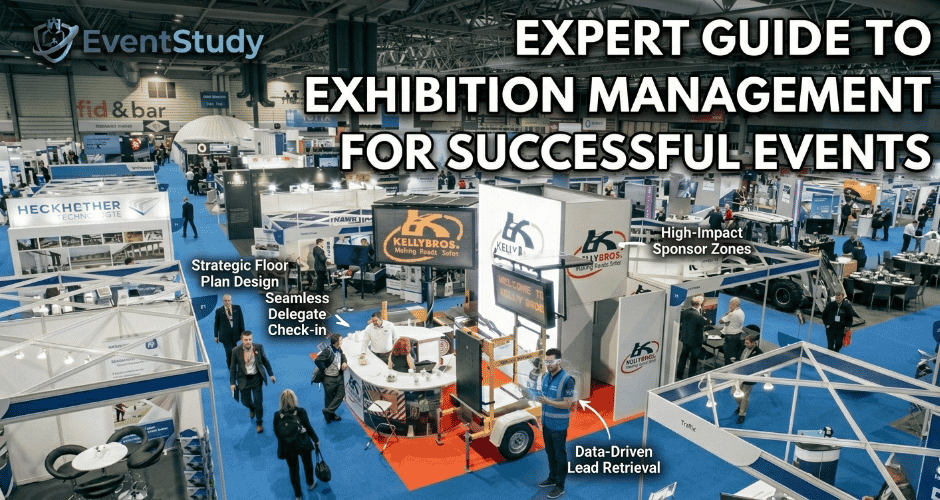
Expert Guide to Exhibition Management for Successful Events
-
May 16, 2026
-
Updated: July 20, 2026
- Event Industry Insights
Exhibition management plays a major role in the events industry. Successful exhibitions help businesses generate leads, launch products, increase brand visibility, and build valuable industry relationships. Trade shows, expos, and corporate exhibitions all require careful planning and professional coordination.
Strong exhibition management combines strategy, logistics, marketing, technology, and on-site operations. Event organisers must manage exhibitors, attendees, venues, budgets, and timelines while ensuring smooth event delivery. This expert guide explains how to plan, manage, and execute successful exhibitions from start to finish.
What Is Exhibition Management?
Exhibition management involves planning, organising, promoting, and executing exhibitions or trade shows. The process includes everything from venue booking and floor planning to exhibitor coordination and post-event evaluation.
What Does Exhibition Management Include?
Exhibition management covers multiple operational areas. Organisers must coordinate suppliers, exhibitors, marketing campaigns, registration systems, and event logistics throughout the entire exhibition lifecycle.
Core exhibition management responsibilities include:
- Venue management
- Floor plan design
- Exhibitor coordination
- Marketing and promotion
- Attendee registration
- Technical setup
- On-site operations
- Post-event reporting
Why Is Exhibition Management Important?
Professional exhibition management helps create organised, engaging, and profitable events. Strong planning also improves attendee experiences and exhibitor satisfaction while reducing operational problems during the event.
Successful exhibition management helps:
- Increase attendee engagement
- Improve exhibitor experiences
- Generate business leads
- Support networking opportunities
- Strengthen brand awareness
1. Define Exhibition Goals and Objectives
Clear objectives provide direction for every part of exhibition planning. Event organisers should identify goals early because exhibition design, marketing strategies, budgeting, and exhibitor recruitment all depend on these targets.
Set Measurable KPIs
Key performance indicators help organisers measure event success after the exhibition ends. Goals should be realistic, measurable, and connected to overall business objectives.
Common exhibition KPIs include:
- Number of attendees
- Lead generation targets
- Exhibitor satisfaction rates
- Sponsorship revenue
- Ticket sales
- Social media engagement
Understand the Target Audience
Audience research helps organisers create exhibitions that match attendee interests and industry needs. Different industries require different exhibition formats and engagement strategies.
Audience analysis may include:
- Industry sectors
- Professional job roles
- Buying behaviour
- Networking interests
- Technology preferences
Learn how the Event Industry Board supports the UK events sector with Event Study, driving policy, innovation, professional standards, and industry growth.
2. Create a Strong Exhibition Budget
Budget planning is one of the most important stages of exhibition management. Organisers must estimate expenses carefully while balancing event quality, operational efficiency, and profitability.
Identify Major Event Costs
Exhibitions involve multiple operational expenses that should be calculated early during the planning phase. Unexpected costs can negatively affect event performance and financial results.
Common exhibition expenses include:
- Venue hire
- Exhibition stand setup
- Marketing campaigns
- Audio-visual equipment
- Staffing costs
- Security services
- Catering
- Event technology
Build a Contingency Fund
Unexpected problems can happen during exhibitions. Backup funding helps organisers respond quickly to technical issues, supplier delays, or emergency operational changes.
Contingency budgets may help cover:
- Last-minute equipment rentals
- Technical failures
- Additional staffing
- Emergency repairs
- Supplier replacements
3. Choose the Right Exhibition Venue
Venue selection directly affects attendee experience, exhibitor satisfaction, and operational efficiency. Exhibition venues should support large crowds, technical requirements, and smooth traffic flow throughout the event.
Evaluate Venue Capacity and Layout
Exhibition venues must comfortably support exhibitors, attendees, networking areas, and presentation spaces. Poor layouts can create congestion and negatively affect visitor experiences.
Important venue considerations include:
- Capacity limits
- Accessibility
- Parking facilities
- Wi-Fi infrastructure
- Loading access
- Emergency exits
Prioritize Accessibility and Location
Accessible venues help increase attendance and improve attendee convenience. Transport connections and nearby accommodation options are also important for large exhibitions.
Good venue locations often provide:
- Public transport access
- Nearby hotels
- Restaurant options
- Clear signage
- Safe surroundings
4. Design an Effective Exhibition Floor Plan
Floor planning strongly influences attendee movement and exhibitor visibility. Well-designed layouts improve traffic flow and help visitors explore the exhibition comfortably.
Create High-Traffic Zones
Popular exhibitors, networking spaces, and interactive areas should be positioned strategically to encourage movement throughout the exhibition floor.
High-traffic areas may include:
- Registration zones
- Food courts
- Demonstration stages
- Interactive booths
- Networking lounges
Avoid Congestion Problems
Poor floor layouts can create overcrowding and reduce attendee satisfaction. Organisers should ensure clear pathways and enough space between exhibition stands.
Strong layouts improve:
- Visitor movement
- Safety management
- Accessibility
- Exhibitor visibility
- Emergency access
5. Develop a Strong Marketing Strategy
Exhibition marketing helps attract attendees, sponsors, and exhibitors. Promotion should begin several months before the event to build awareness and increase registrations.
Use Digital Marketing Channels
Online marketing is essential for modern exhibitions. Social media campaigns, email marketing, and targeted advertising help organisers reach industry audiences effectively.
Popular exhibition marketing channels include:
- LinkedIn campaigns
- Email newsletters
- Event landing pages
- Paid advertisements
- Influencer partnerships
Encourage Exhibitor Promotion
Exhibitors can help expand event reach through their own marketing channels. Shared promotion strategies often increase attendee numbers and brand visibility.
Exhibitor marketing support may include:
- Social media toolkits
- Promotional graphics
- Event hashtags
- Email templates
- Digital banners
Learn about promoting events using Instagram in the UK with Event Study, including content strategies, audience engagement, hashtags, reels, and event marketing tips.
6. Manage Exhibitor Relationships Professionally
Exhibitors are central to exhibition success. Strong communication and efficient support help improve exhibitor satisfaction and long-term event loyalty.
Provide Clear Exhibitor Guidelines
Exhibitors need accurate operational information before the event begins. Clear communication reduces confusion and improves setup efficiency.
Exhibitor information may include:
- Setup schedules
- Health and safety rules
- Booth dimensions
- Technical requirements
- Delivery procedures
Use Digital Exhibitor Portals
Technology can simplify exhibitor management processes. Digital portals help organisers share updates, collect forms, and manage exhibitor communication more efficiently.
Exhibitor portals may support:
- Online registrations
- Document uploads
- Payment processing
- Floor plan access
- Live communication

7. Focus on Attendee Engagement
Modern exhibitions must keep attendees engaged throughout the event. Interactive experiences help improve visitor satisfaction and encourage longer event participation.
Add Interactive Experiences
Interactive elements make exhibitions more memorable and encourage audience participation. Attendees are more likely to engage with hands-on experiences than static displays.
Popular engagement ideas include:
- Live product demos
- Interactive workshops
- VR experiences
- Networking sessions
- Gamification activities
Create Educational Content
Educational sessions increase exhibition value for attendees. Conferences, panel discussions, and seminars help attract professional audiences seeking industry insights.
Educational content may include:
- Industry panels
- Keynote speakers
- Product tutorials
- Expert workshops
- Training sessions
8. Prepare for On-Site Event Operations
Strong operational planning ensures exhibitions run smoothly on event days. Organisers must coordinate staff, suppliers, security, and technical teams efficiently.
Assign Clear Staff Roles
Every team member should understand their responsibilities before the exhibition begins. Clear role allocation improves communication and problem-solving during live operations.
Important staff roles may include:
- Registration teams
- Technical support staff
- Site managers
- Security personnel
- Exhibitor coordinators
Test Technology Before Opening
Technical issues can damage attendee experiences and disrupt exhibition schedules. Testing equipment before the event reduces operational risks significantly.
Important technical checks include:
- Wi-Fi systems
- Lighting equipment
- Sound systems
- Registration scanners
- Presentation screens
9. Use Technology to Improve Exhibition Management
Technology has become essential for modern exhibition management. Digital tools help organisers improve efficiency, engagement, communication, and data collection throughout the event lifecycle.
Implement Event Management Software
Event software helps organisers manage registrations, communication, scheduling, and attendee tracking more effectively.
Popular software features include:
- Online ticketing
- Mobile event apps
- Attendee analytics
- Badge printing
- Networking tools
Collect Real-Time Event Data
Data helps organisers understand attendee behaviour and exhibition performance. Real-time analytics also support faster operational decision-making during the event.
Useful event metrics include:
- Visitor traffic patterns
- Session attendance
- Lead capture rates
- Engagement levels
- App usage statistics
10. Plan Post-Event Follow-Up and Evaluation
Exhibition management does not end when the venue closes. Post-event follow-up is essential for maintaining relationships and evaluating event success.
Follow Up With Leads Quickly
Exhibition leads lose value if follow-up communication is delayed. Many organisers aim to contact leads within a few days after the event.
Post-event follow-up may include:
- Thank-you emails
- Sales outreach
- Survey requests
- Meeting invitations
- Content sharing
Gather Feedback and Analyze Results
Feedback helps organisers improve future exhibitions. Attendees, exhibitors, sponsors, and staff can all provide valuable operational insights.
Post-event analysis may include:
- Attendee surveys
- Exhibitor feedback
- Financial reporting
- KPI reviews
- Operational evaluations
Discover the key financial principles every UK event planner should know with Event Study, including budgeting, forecasting, pricing, cash flow, and cost control strategies.
What Common Exhibition Management Mistakes Should You Avoid?
Exhibitions can face operational problems if organisers overlook logistics, communication, or attendee experience. Avoiding common mistakes helps improve event quality and efficiency.
Poor Communication With Exhibitors
Late updates or unclear instructions often create confusion during exhibition setup and live operations.
Communication problems may cause:
- Delayed booth setup
- Technical misunderstandings
- Exhibitor dissatisfaction
- Operational delays
Weak Crowd Management
Overcrowded spaces reduce comfort and create safety risks. Crowd flow should always be considered during floor planning.
Poor crowd management can lead to:
- Congestion
- Long queues
- Accessibility problems
- Safety concerns
Ignoring Post-Event Analysis
Many organisers focus only on event delivery and forget evaluation. Post-event reporting helps identify strengths and operational weaknesses.
Analysis helps improve:
- Future planning
- Budget management
- Attendee engagement
- Sponsor satisfaction
Learn the basics of event logistics in the UK with Event Study, including planning, coordination, transport, scheduling, and ensuring smooth event operations.
Course Suggestion: Events Management Training
The Events Management Training from Event Study gives you the skills to plan, organise, and manage events from start to finish. Learn coordination, logistics, and execution to deliver successful events with confidence.
Common Questions About Exhibition Management
Exhibition management often raises important questions about planning timelines, event technology, exhibitor coordination, and attendee engagement. Clear answers help organisers manage exhibitions more effectively while improving operational efficiency and overall event experiences.
What is exhibition management?
Exhibition management involves planning, organising, promoting, and executing exhibitions or trade shows. The process includes venue coordination, exhibitor management, marketing, logistics, registration systems, and post-event evaluation.
Why is exhibition management important?
Professional exhibition management helps improve attendee experiences, exhibitor satisfaction, operational efficiency, and business performance. Strong management also helps exhibitions run smoothly while reducing logistical problems during live events.
How early should exhibitions be planned?
Large exhibitions are usually planned 6–12 months before the event date. Early planning allows organisers to secure venues, recruit exhibitors, launch marketing campaigns, and coordinate suppliers effectively.
What technology is used in exhibitions?
Modern exhibitions often use registration systems, mobile event apps, analytics tools, VR experiences, badge printing systems, and digital signage. Technology helps improve communication, attendee engagement, and operational efficiency.
How do exhibitions attract attendees?
Exhibitions attract visitors through strong marketing campaigns, educational sessions, networking opportunities, keynote speakers, social media promotion, and exhibitor partnerships.
What makes an exhibition successful?
Successful exhibitions combine strong planning, effective marketing, smooth logistics, attendee engagement, and professional exhibitor support. Clear event goals and strong operational management also contribute to overall success.
How can organisers improve exhibitor experiences?
Clear communication, strong technical support, efficient setup processes, and effective attendee traffic flow help improve exhibitor satisfaction during exhibitions.
Why is post-event follow-up important?
Post-event follow-up helps maintain relationships, convert sales leads, gather feedback, and evaluate exhibition performance. Quick communication after the event also improves long-term business opportunities.
Conclusion
Successful exhibition management requires careful planning, strategic coordination, and strong operational execution. Every stage, from budgeting and venue selection to exhibitor management and post-event evaluation, plays an important role in overall event success.
Modern exhibitions must balance logistics, technology, attendee engagement, and marketing strategies to create valuable experiences for exhibitors and visitors alike. Strong communication and detailed planning also help reduce operational risks during live events.
Sign up to receive our latest updates
Get in touch
Call us directly?
020 8904 8326
Address
63 Cowcross St, Islington, London EC1M 6BP, United Kingdom
info@eventstudy.org.uk
Need some help?
Popular categories