
What Is Event Logistics? Complete UK Guide to Event Logistics Management
-
May 1, 2026
-
Updated: July 20, 2026
- Event Industry Insights
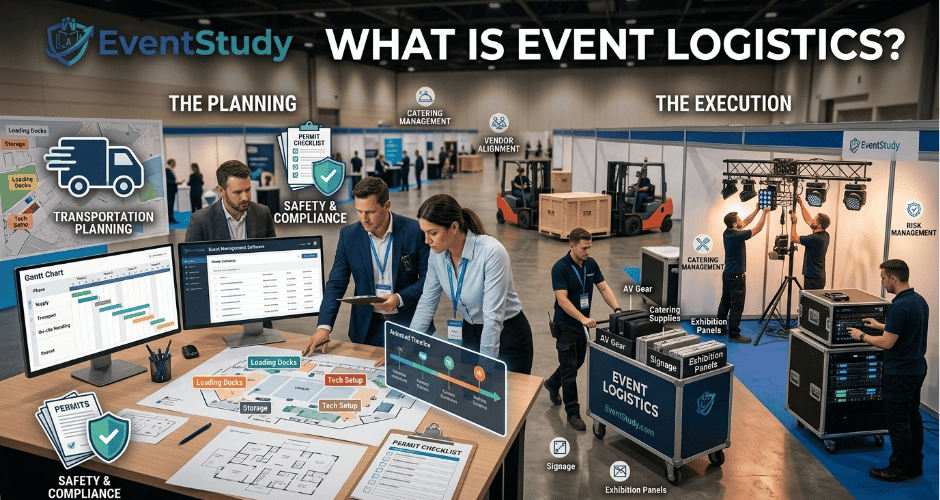
Event logistics is the strategic planning, coordination, and execution of all physical and operational elements required to bring an event to life. It serves as the engine of the event world. This discipline ensures that staff, attendees, talent, equipment, and catering arrive at the right place at the precise moment they are needed.
The UK industry faces unique geographical and regulatory challenges. Logistics managers here handle everything from initial venue scouting to complex on-site load-in schedules. They also manage strict health and safety compliance. Without a solid logistical foundation, even the most creative event concepts can fail during execution.
What Are the Key Components of Event Logistics?
Managing an event requires juggling multiple moving parts simultaneously. Breaking these down into core categories helps maintain control over the project.
Venue Logistics and Site Management
Selecting a venue involves more than just picking a beautiful room. Logistics professionals must map out layouts and manage load-in and load-out schedules. They check floor load capacities for heavy AV equipment and ensure there is enough power for the entire production.
Transportation and Secure Storage
Moving equipment across the UK requires precision. This includes transporting high-value items like sound consoles or delicate decor. Secure storage is often needed before the event starts to prevent last-minute delays.
Vendor and Supplier Coordination
A typical event involves dozens of external partners. Logistics teams coordinate with caterers, AV technicians, and security firms. They ensure every supplier knows exactly when to arrive and where to park.
On-Site Operations and Flow
Once the doors open, logistics shifts to real-time management. This involves guiding attendee flow, managing queues, and ensuring crowd safety. It also includes the technical setup of stages and sound systems.
Understand the difference between event management and event logistics with Event Study, including strategy, planning, operations, and how both work together to deliver successful events.
5 Steps to Planning Successful Event Logistics
Starting a logistics plan can feel overwhelming for beginners. Following a structured roadmap ensures nothing gets missed.
1. Define Goals and Scope
Establish the budget and key performance indicators (KPIs) early. Knowing the “what” and “why” helps determine how much equipment and manpower you need to hire.
2. Create a Master Timeline
Develop a detailed schedule of every task. List every pickup, delivery, and setup milestone. Always include buffer times to account for UK traffic or weather delays.
3. Secure Suppliers and Venues Early
The UK events market is highly competitive. Start the tendering process months in advance to secure your preferred partners. Early booking often leads to better rates and guaranteed availability.
4. Develop a Risk Management Plan
Identify potential failures before they happen. Create backup plans for technical glitches, transportation strikes, or sudden rain. A strong contingency plan keeps the event running when things go wrong.
5. Rehearse the Execution
Conduct a full walkthrough before the live date. Test every piece of equipment and walk the path an attendee would take. This identifies bottlenecks that weren’t visible on paper.
Common Challenges in the UK Event Industry
The UK presents specific hurdles that planners must navigate carefully.
Narrow Access and Historic Sites
Many venues in cities like London or Edinburgh have tiny loading docks. Narrow streets and historic architecture make it difficult for large trucks to deliver equipment. Precise vehicle scheduling is mandatory in these areas.
Strict Licensing and Permits
Compliance with local council regulations is vital. You must secure permits for food, alcohol, and amplified sound. Failure to follow these rules can lead to immediate event shutdowns.
Tight Load-in Windows
Venues often have back-to-back bookings. This leaves only a few hours to set up an entire stage. Efficiency and a well-briefed crew are the only ways to meet these deadlines.
Why Technology Is Essential for Modern Logistics
Digital tools have replaced paper checklists in the modern era. Software allows for real-time tracking of assets and instant communication with the team.
-
Asset Tracking: Know exactly where your equipment is during transit.
-
Digital Registration: Speed up attendee entry and reduce queues.
-
Event Apps: Provide real-time updates to guests and staff.
Access the ultimate master event planning checklist for 2027 with Event Study, covering budgeting, logistics, vendor management, marketing, timelines, and flawless event execution.
Course Suggestion: Event Logistics and Operations
The Event Logistics and Operations Course from Event Study provides the practical skills needed to master the industry’s “engine room.” This professional program bridges the gap between creative concepts and technical execution, covering everything from vendor management to health and safety compliance. By learning to build master timelines and risk management plans, you gain the strategic tools required to become job-ready for high-level UK event coordination.
Frequently Asked Questions (FAQ)
What is the difference between event management and event logistics?
Event management covers the broad vision, marketing, and overall guest experience. Event logistics focuses specifically on the physical movement, technical setup, and operational “heavy lifting.”
How early should I start planning logistics?
Planning should begin at least six to twelve months before a large event. Smaller events may require three months of lead time to secure quality vendors.
What insurance is needed for UK event logistics?
Public liability insurance is a standard requirement. You should also consider employer’s liability and equipment insurance to cover damage during transit or setup.
How do I handle international shipping for a UK event?
You must account for customs clearances and Incoterms if moving goods from outside the UK. Hiring a specialist freight forwarder is highly recommended for international projects.
Conclusion
Mastering event logistics is the secret to a stress-free production. It requires a blend of meticulous planning and the ability to solve problems on the fly. By understanding the core components—from venue management to risk mitigation—you can ensure your event runs like a well-oil machine. The UK industry is demanding, but with the right timeline and technology, your next project will be a resounding success. Focus on the details today so you can enjoy the results tomorrow.
Sign up to receive our latest updates
Get in touch
Call us directly?
020 8904 8326
Address
63 Cowcross St, Islington, London EC1M 6BP, United Kingdom
info@eventstudy.org.uk
Need some help?
Popular categories