
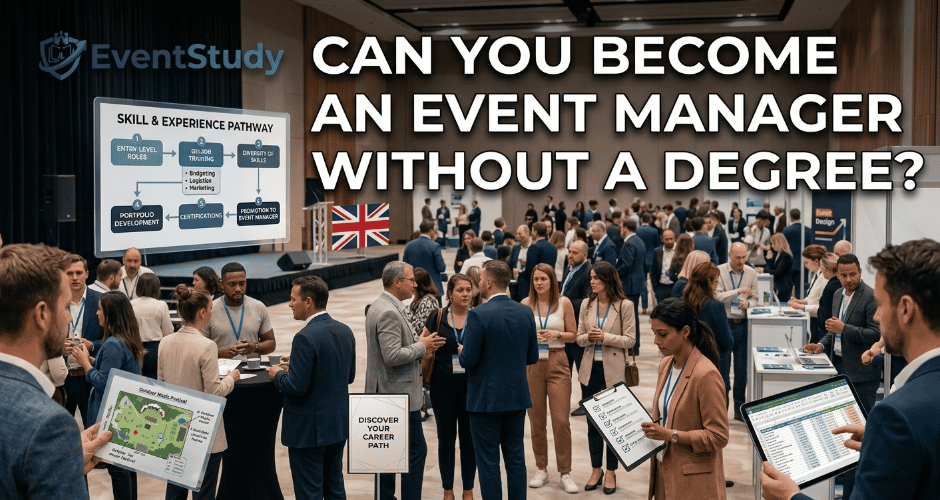
Can You Become an Event Manager Without a Degree?
-
May 5, 2026
-
Updated: July 20, 2026
- Event Industry Insights
Yes, you can absolutely become an event manager without a degree. Employers prioritising hands-on experience, a strong portfolio, and skills like organization and communication often value practical competence over formal education. You can enter the field by working as an event assistant, volunteering, or starting with small, local events. The National Careers Service confirms that relevant experience and strong transferable skills are the primary metrics for hiring managers.
Evidence of your ability to manage a budget and handle pressure is what secures a job offer. A portfolio of successfully executed projects speaks louder than a certificate from a lecture hall. Most industry leaders started by coordinating community gatherings or working in hospitality. The event sector is generally highly accessible to motivated individuals who demonstrate a proactive approach. Motivation and a willingness to learn on the job are the real currencies of this profession.
What Are the Best Entry Routes for Non-Degree Holders?
Traditional academic paths are just one way to break into the industry. Alternative routes often provide a more direct line to senior management roles.
Starting as an Event Assistant or Coordinator
Entry-level roles such as event assistant or coordinator offer essential on-the-job training. These positions allow you to observe how senior managers handle vendors and technical glitches. You gain exposure to the high-stakes environment of live production without carrying the full weight of responsibility immediately. Growth within a company is often rapid for those who show initiative.
Explore the top event management companies in the UK, known for corporate events, creative production, logistics expertise, and delivering memorable experiences.
Volunteering and Community Events
Planning small events like fundraisers, parties, or local community activities builds a vital portfolio. Every charity auction or neighborhood festival you help run serves as a case study for future employers. Documenting these successes shows that you can handle logistics and stakeholder management. Local charities are almost always looking for help, providing a low-risk environment to hone your craft.
Discover how the Event Industry Board shapes the UK events industry, influencing policy, driving growth, and supporting innovation across the sector.
How Do Transferable Skills Replace a Degree?
Experience from related fields often provides a better foundation than a general academic degree. Many skills used in other industries are directly applicable to the production floor.
Leveraging Hospitality and Catering Backgrounds
Hospitality professionals already understand the nuances of guest service and floor management. Managing a busy restaurant shift requires many of the same skills as running a corporate conference. You already know how to deal with demanding clients and unexpected shortages. This background makes you a highly attractive candidate for event agencies.
Using Marketing and Administrative Experience
Marketing roles teach you how to promote an event and engage an audience. Administrative experience ensures you have the organizational discipline to manage complex timelines. Every spreadsheet you have mastered and every campaign you have run adds value to your professional toolkit. These practical applications are exactly what modern event firms look for during the recruitment process.
Why Are Short Courses and Certifications Important?
Specialised training provides a focused knowledge base that a general degree might lack. These certificates show expertise and a commitment to professional development.
Obtaining Professional Certifications
Certificates in event planning or project management show expertise to potential clients. Options like the Certified Meeting Professional (CMP) designation are globally recognised. These programs focus strictly on the industry-specific knowledge you need to succeed. They are often more cost-effective and time-efficient than a three-year university program.
Learn what complete event planning in the UK with Event Study involves, including strategy, logistics, budgeting, coordination, and delivering seamless end-to-end events.
Building a Foundation with Online Learning
Online modules allow you to learn at your own pace while maintaining a full-time job. You can focus on specific areas such as budget management, risk assessment, or event technology. This targeted learning ensures that your knowledge is current and relevant to 2026 standards. It allows you to fill specific gaps in your experience without returning to full-time education.
What Are the Key Skills Required for Event Management?
Technical knowledge must be paired with strong interpersonal abilities. These core competencies ensure that a production runs smoothly from concept to completion.
Excellent Planning and Organization: Managing multiple timelines and suppliers requires a methodical mind.
Budgeting and Financial Management: Keeping a project profitable is essential for long-term career success.
Relationship Management and Communication: Building trust with vendors and clients is a daily requirement.
Problem-Solving Under Pressure: Thinking on your feet when a technical failure occurs is a mandatory skill.
Course Suggestion: Events Management Training
The Events Management Training from Event Study gives you the skills to plan, organise, and manage events from start to finish. Learn coordination, logistics, and execution to deliver successful events with confidence.
Conclusion
Practical expertise and a proactive mindset are the true keys to success in this industry. Choosing to forgo a university degree does not limit your potential to become a leader in event management. Focus on gaining hands-on experience and building a robust portfolio of real-world results. Professional certifications and short courses offer a fast track to the specialized knowledge you need.
The UK events sector continues to be one of the most accessible and rewarding fields for motivated individuals. Start small, document every success, and use your transferable skills to open doors. Your career path is defined by the quality of the events you produce, not the length of your time in a classroom. Take the first step today by coordinating a local project or enrolling in a practical coordination course. Professionalism is a practice, and the best way to learn is by doing.
Frequently Asked Questions (FAQ)
Is a degree a waste of time for event management?
A degree is not a waste, but it is not a requirement. It provides a broad educational base, but practical experience remains the most valuable asset in the hiring process.
Can I get a high-paying job without a degree?
Yes, salaries in this field are often performance-based. Senior event managers with a track record of successful high-budget productions can earn significant income regardless of their educational background.
How do I build a portfolio from scratch?
Start with small, documented projects. Take photos, keep copies of your budgets, and ask for testimonials from clients or charity directors.
Which industry associations should I join?
Joining groups like the Association of Event Organisers (AEO) or local UK business networks helps you meet professionals and find job opportunities.
Sign up to receive our latest updates
Get in touch
Call us directly?
020 8904 8326
Address
63 Cowcross St, Islington, London EC1M 6BP, United Kingdom
info@eventstudy.org.uk
Need some help?
Popular categories