
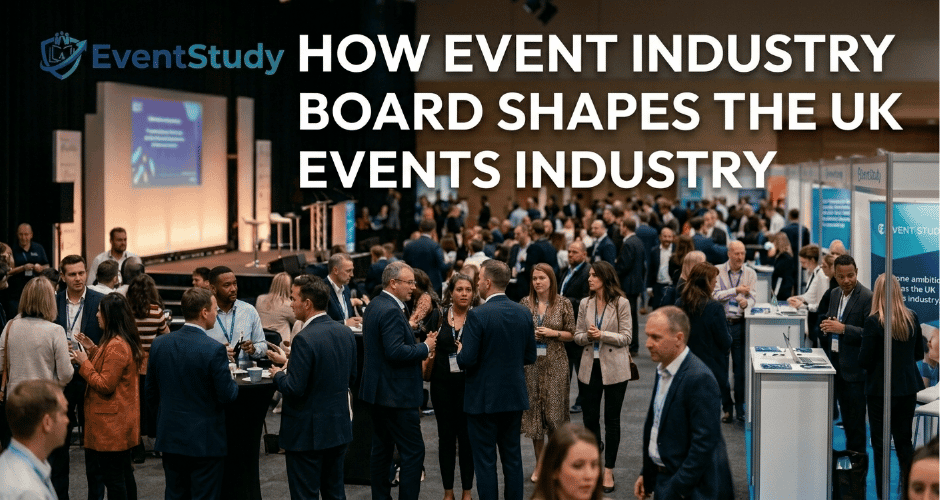
How Event Industry Board Shapes the UK Events Industry
-
May 1, 2026
-
Updated: July 20, 2026
- Event Industry Insights
The UK events industry stands as a powerhouse of the national economy. Records from late 2025 show the sector reached a staggering value of £68.7 billion. Strategic leadership from the Events Industry Board (EIB) drives much of this massive success. This body functions as the primary link between private sector experts and the UK Government.
Aligning industry growth with national policy allows the EIB to ensure the UK remains a premier global destination. Business and leisure events thrive under this structured guidance. This post explores how the board influences the sector and defines the future of British events.
How Event Industry Board Shapes the UK Events Industry
The Event Industry Board shapes the UK events industry by acting as a strategic bridge between industry leaders and the government. Its primary role involves providing market intelligence and expert advice to ensure high-level policy decisions meet sector needs.
Specific influence is exerted through:
Government Liaison: Ministers receive direct evidence regarding the economic value of events.
Policy Alignment: Working groups align the industry with the “Tourism Recovery Plan” to boost global competitiveness.
Strategic Planning: Advocacy for a cohesive national strategy integrates business, outdoor, and cultural events into the wider economy.
Actions taken by the EIB transform a fragmented industry into a unified economic force. This unity makes it easier for the government to provide targeted support and investment.
Strategic Advisory and Policy Influence
The EIB operates as a vital advisor to the Department for Business and Trade and the Department for Culture, Media and Sport.
Delivering the Tourism Recovery Plan
The EIB Working Group (EIBWG) focuses heavily on the Tourism Recovery Plan. Members advise the government on creating a more competitive environment. Such advice helps the UK attract, retain, and grow major international events that might otherwise move to rival European cities.
Creating a National Event Strategy
Partnerships with bodies like UKEVENTS allow the board to push for a “National Event Strategy.” This strategy treats events as more than just gatherings. It positions them as vital tools for achieving social goals, such as regional regeneration and international trade.
Discover how to plan a perfect gala dinner event with Event Study, covering venue selection, guest experience, entertainment, catering, and memorable event execution.
Economic Growth and Competitiveness
Proving value through hard data remains one of the most important ways the board shapes the industry.
Evidence-Based Advocacy
Research commissioned by the EIB, such as the Size and Scale Index for Exhibitions (SASIE) report, provides essential clarity. Verified statistics allow the board to make a stronger case for infrastructure investment and tax incentives.
Explore the expert guide to exhibition management with Event Study, covering planning, logistics, vendor coordination, visitor engagement, and delivering successful events.
Boosting International Bids
Competition for massive association meetings and congresses happens on a global scale. The EIB supports initiatives that help British cities win these lucrative bids. Collaboration with VisitBritain ensures the UK maintains a polished, professional presence on the world stage.
Promoting Regional Development
Commitment to “levelling up” remains a core priority. The board advises on developing event portfolios outside of London. This ensures that cities like Manchester, Birmingham, Glasgow, and Belfast benefit from the billions of pounds circulating in the sector.
Master Instagram marketing for events in the UK with Event Study, including content planning, influencer outreach, paid ads, and audience interaction.
Standards, Skills, and Sustainability
The EIB looks beyond immediate financial gains to focus on the long-term health of the workforce and the planet.
Professionalism and Talent
Efforts like the Events Apprenticeship Framework (EAF) fall under board oversight. Clear career paths become available for young people through these initiatives. Professionalizing the sector ensures a steady pipeline of talent capable of managing complex future events.
Sustainability and DEI
Sustainability has transitioned from an option to a requirement. The EIB supports the development of environmentally friendly policies across the entire sector. Additionally, it pushes for better Diversity, Equity, and Inclusion (DEI) standards. These changes make the UK events industry more welcoming to diverse audiences and employees alike.
Key Areas of Focus for 2026 and Beyond
Clear priorities are set for 2026 to maintain the industry’s record-breaking momentum.
Economic Targets: Business events alone are expected to reach £27.6 billion by 2026, prompting a focus on scaling up venue capacities.
Overcoming Trade Friction: Active work with the government addresses visa regulations and equipment transport issues that became complex post-Brexit.
Accessibility Research: Ensuring that all events remain accessible to people with disabilities stands as a major research focus this year.
Course Suggestion: Event Vendor Management Training Course
The Event Budget Management Course from Event Study teaches you how to plan, track, and control event budgets. Learn cost estimation, expense management, and financial planning to deliver successful events within budget.
Conclusion
The Event Industry Board functions as the architect behind the thriving event landscape of the UK. Bridging the gap between the private sector and government policy ensures the industry receives recognition as a vital economic pillar. Every corner of the sector feels the EIB’s influence, from secured international bids to a professionalized workforce.
The board’s role in navigating challenges like trade friction and sustainability will grow even more important as the industry pursues its £68.7 billion future. The EIB remains the leading voice ensuring the world continues to meet, trade, and celebrate on British soil.
FAQ: Understanding the Event Industry Board
What is the Events Industry Board (EIB)?
The EIB is a government-appointed advisory body representing the events sector to the UK Government. It includes leaders from exhibitions, conferences, and outdoor events.
Who does the EIB work with?
The board maintains close ties with government departments, VisitBritain, and industry umbrella groups like UKEVENTS and The Power of Events.
How does the EIB help small event businesses?
Advocating for better industry standards and national strategies creates a stable economic environment. Small businesses find it easier to thrive and access better talent under these conditions.
What is the current value of the UK events industry?
Reports for 2025/2026 value the industry at approximately £68.7 billion.
Sign up to receive our latest updates
Get in touch
Call us directly?
020 8904 8326
Address
63 Cowcross St, Islington, London EC1M 6BP, United Kingdom
info@eventstudy.org.uk
Need some help?
Popular categories