
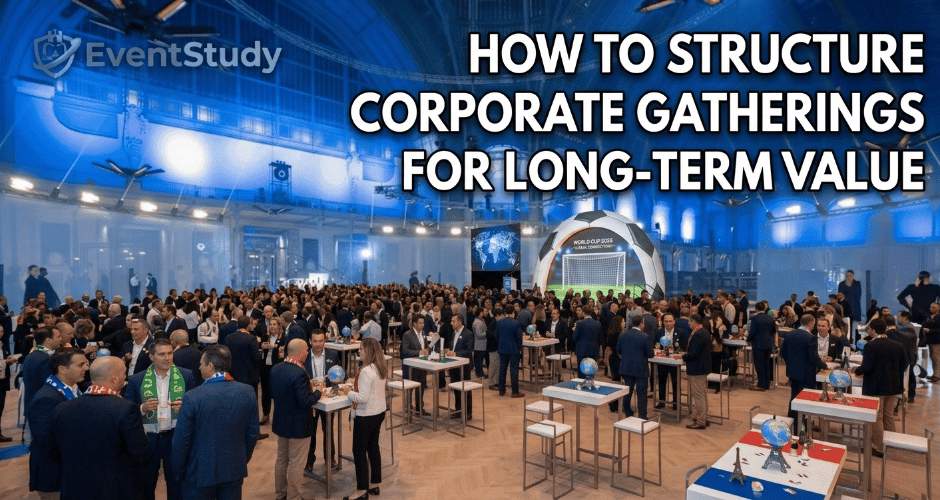
How to Structure Corporate Gatherings for Long-Term Value
-
May 23, 2026
-
Updated: July 20, 2026
- Event Industry Insights
Modern businesses invest significant capital into hosting professional assemblies each year. These initiatives require vast resources, massive team coordination, and weeks of careful scheduling. Far too many organizations treat these experiences as single, isolated moments on a calendar. The true measure of success extends far beyond the final closing presentation. Long-term value must be the foundational target of every operational decision you make.
Flawless execution keeps participants talking for months after the gathering concludes. Companies must design a unified journey that blends business goals with memorable attendee experiences. This approach ensures your financial investment continues to yield cultural or financial dividends.
What is How to Structure Corporate Gatherings for Long-Term Value?
Structuring corporate gatherings for long-term value means shifting the focus from simple logistical completion to long-term impact. This strategic framework aligns every operational component with sustained organizational growth. Success relies on clear classification, deliberate timeline structuring, and complete data tracking.
VALUE-DRIVEN ASSEMBLY FRAMEWORK
1. OBJECTIVE MAPPING
- Match metrics to core formats
- Fix clear financial limits early
- Select flexible calendar dates
2. BALANCED TIMELINE
- Maintain 50/50 session ratio
- Insert lengthy networking intervals
- Guard participant energy levels
3. POST-EVENT SUSTAINABILITY MAP
- Distribute instant feedback forms to capture true audience data
- Convert recorded video segments into ongoing digital courses
- Review critical performance drops against initial business targets
Categorizing Your Strategic Corporate Events
Conferences and Seminars: These platforms host industry panels, share advanced educational insights, and drive lead generation.
Team-Building Retreats: Internal workshops use immersive exercises to strengthen company culture and lower employee turnover.
Product Launches: Marketing-driven media showcases generate immediate consumer demand and accelerate your sales pipeline.
Galas and Award Ceremonies: Formal milestone gatherings reward high performance and secure long-term employee loyalty.
Proven Execution Strategies for High Impact
Establish Clear Objectives Early: Define exact success metrics before speaking with property owners or third-party suppliers.
Build in Buffer Funds: Dedicate a specific cash pocket to protect your project from sudden equipment rental fees.
Prioritize Flexible Dates: Research international industry schedules to avoid losing top-tier guest speakers to competing events.
Vet Technology Thoroughly: Dry-run your digital registration portals and live audio systems multiple times before arrival day.
Balance the Agenda Dynamic: Maintain an even distribution between intensive lecture blocks and casual interaction spaces.
Critical Mistake Areas to Overcome
Ignoring the Guest Experience: Focusing purely on administrative timetables while completely neglecting room ventilation and seating comfort.
Enforcing Rigid Schedules: Packing agendas with endless back-to-back speeches that leave your target audience completely exhausted.
Neglecting Post-Event Analysis: Skipping digital follow-up surveys and losing invaluable data required to improve your next project.
Failing to Plan for Contingencies: Operating without backup options for transport delays, tech failures, or sudden talent cancellations.
How Do You Align Event Infrastructure with Long-Term Business Goals?
Building lasting value requires matching physical choices with high-level commercial outcomes. Randomly selected venues or layouts rarely generate a strong return on investment.
Choosing Venues That Support High Engagement
Spatial design influences how participants absorb information and build professional relationships. Avoid properties that utilize central pillars, low ceilings, or restrictive boundary walls. Clean sightlines keep the audience focused on your central presentation message.
Properties must offer accessible transit connections to minimize arrival friction for international delegates. High-quality geographic positioning boosts registration numbers and ensures high opening-day attendance.
TECHNICAL INFRASTRUCTURE CHECKLIST
| Access Points | Proximity to main transit hubs and airports |
| Power Capability | Independent circuits for complex video setups |
| Acoustics | Soundproof dividers for concurrent sessions |
| Digital Pipe | Dedicated high-speed internet connectivity |
Embedding Brand Messaging Throughout the Space
Every visual touchpoint represents an opportunity to reinforce your company’s core values. Use modern digital signage instead of cheap, throwaway plastic banners. This choice permits instantaneous schedule updates while cutting down on environmental waste.
Interactive demonstration zones give guests a tangible connection to your newest software products. Consistent environmental branding creates a lasting mental impression on potential enterprise clients.
What Role Does Technology Play in Securing Long-Term Event Value?
Digital frameworks are the primary mechanism for extending your event’s lifetime value. Modern software tools streamline initial administrative hurdles while generating extensive behavioral data.
Transforming Arrival and Registration Systems
First impressions dictate the tone for your entire professional program. Replace outdated paper guest check-in systems with modern cloud-based ticketing software.
Self-service check-in desks print personalized identification badges using simple QR code scans. This method eliminates long morning entrance queues and keeps arrivals calm. Live digital tracking shows your management team exactly when peak arrival times occur.
EVENT CHECK-IN EXPERIENCE FLOW
Manual Clipboard Check-In
→
Extended Queue Friction
→
Negative First Impression
QR Code Scan Kiosks
→
3-Second Badge Print
→
Flawless Transition
Capturing High-Value Digital Content
Recorded presentations provide a steady supply of marketing assets for months to come. Hire professional video teams to record every keynote address and panel debate.
These digital assets work perfectly for social media campaigns or internal training platforms. Repurposing media assets guarantees your educational materials reach individuals who could not travel to the live venue.
Utilizing Attendee Behavioral Data
Wireless tracking tools reveal exactly how participants move through your venue. Use encrypted badge scanning to evaluate individual seminar attendance and average stay times.
This data helps marketing departments pinpoint which topics generated real interest. Reviewing these analytics takes the guesswork out of planning future corporate itineraries.
Course Suggestion: Event Coordination for Corporate Functions
The Event Coordination for Corporate Functions course from Event Study teaches you how to plan and manage professional business events. Learn to handle venues, logistics, and execution to deliver smooth and successful corporate events.
How Do You Protect Your Event Budget from Costly Overruns?
Financial control requires strict spreadsheet management and transparent vendor negotiations. Small, unmonitored line items can quickly destroy your projected financial margins.
Building Detailed Expense Category Models
Separate your cost sheets into fixed facility overheads and variable per-head expenses. Fixed costs cover venue space, staging equipment, core marketing assets, and insurance premiums. Variable fees scale directly with your guest list and include catering, badges, and gifts.
Log every actual expenditure immediately to spot dangerous spending trends before they escalate. Clear accounting practices keep your production timeline running smoothly.
ESTIMATED OPERATIONAL SPENDING
| Space & Catering |
Allocation
45%
|
| Tech Production & Staging |
Allocation
30%
|
| Print & Digital Marketing |
Allocation
10%
|
| Speakers & Travel Logistics |
Allocation
5%
|
| Emergency Contingency Buffer |
Allocation
10%
|
Mastering Supplier Contract Discussions
Favorable agreement terms are built on competitive bidding and detailed cost breakdowns. Demand itemized quotes from every vendor to eliminate unexpected service fees later.
Compare multiple suppliers across identical service categories to establish strong negotiation leverage. Include flexible termination clauses to protect your enterprise during sudden market shifts. Establishing strong partner relationships ensures priority support during high-pressure setup days.
Learn how to run a roundtable discussion with Event Study in seven simple steps, improving collaboration, audience engagement, communication, and productive conversations.
How Do You Design High-Retention Educational Programs?
Creating an effective event timeline requires a deep understanding of human attention limits. Jamming schedules with non-stop presentations causes immediate mental fatigue.
Balancing Focus Blocks and Sensory Breaks
Keep individual presentations limited to a maximum of forty-five minutes. Follow these intensive learning blocks with thirty-minute networking windows.
Providing quiet breakout areas allows corporate guests to handle urgent emails without leaving the venue. Serving nutritious food options during breaks prevents afternoon energy drops.
ATTENDEE ENGAGEMENT FLOW
45-Min Lecture
Focused educational presentation with keynote delivery.
→
30-Min Lounge Break
Networking, refreshments, and attendee recharge interval.
→
45-Min Interactive Panel
Audience-driven discussion featuring expert collaboration.
Sourcing Exceptional Presenters
Speaker quality directly impacts the ultimate value of your professional gathering. Combine external market analysts with internal company leaders to build a diverse program.
Brief your talent regarding target audience expectations well before they take the stage. Challenge presenters to replace text-heavy slideshows with clear, impactful graphics. Conducting mandatory sound checks ensures a seamless transition between sessions.
How Do You Measure the Multi-Year Return on Investment?
Your responsibilities do not conclude when the final production trucks drive away. Gathering accurate performance metrics is essential for justifying your budget to executive leadership.
Collecting Immediate Audience Feedback
Distribute digital evaluation forms within two hours of your closing remarks. Use short, clear questions to maximize submission rates on mobile devices.
Incorporate Net Promoter Score metrics to track year-over-year satisfaction levels. Reviewing open feedback fields uncovers specific operational wins and areas that need adjustment.
Discover 13 fun corporate event ideas in the UK for late 2026 with Event Study, designed to boost engagement, networking, teamwork, and memorable business experiences.
POST-EVENT FEEDBACK PERFORMANCE
Instant Survey Distribution
Real-time attendee feedback collection immediately after sessions.
→
75% Response Rate
Higher engagement creates broader and more reliable audience input.
→
High Data Accuracy
Fresh attendee experiences improve insight quality and reporting.
Delayed Survey Distribution
Late follow-up reduces participant attention and response urgency.
→
20% Response Rate
Limited feedback volume weakens measurable event analysis.
→
Low Data Accuracy
Delayed memory recall lowers the reliability of attendee feedback.
Reviewing Financial Performance and Pipeline Growth
Compare final ledger sheets with your initial financial targets to analyze cost variances. Calculate key metrics like cost-per-attendee against the volume of sales leads generated.
Document every logistical challenge in a central repository to preserve institutional knowledge. Sharing these insights helps your management team continuously optimize your corporate event playbook.
What preparation timeline ensures long-term event success?
Large-scale corporate events require nine to twelve months of deliberate planning to secure premier venues and book top-tier speakers. Smaller internal team workshops can be completed in three to six months using localized vendor networks.
How can coordinators confirm venue internet speeds before booking?
Request verified bandwidth performance documentation directly from the venue engineering staff during site visits. Run independent speed tests under simulated crowd conditions to check upload and download capacity. Secure dedicated networks for presentation screens and live media streams.
What calculation formula prevents excessive catering waste?
Analyze historical attendance data alongside your active digital registration sheets. Plan for a standard five to ten percent attendee drop-out rate due to travel adjustments. Confirm your final headcounts with kitchen staff three business days prior to launch to save money.
Should management record every breakout track?
Capturing presentation media maximizes the lifetime value of your corporate event content. Use high-definition recordings for subsequent promotional campaigns, employee training, or client onboarding programs.
How do teams manage a sudden speaker cancellation?
Maintain alternative program options, such as shifting panel timelines or extending interactive workshop sessions. Prepare pre-recorded presentations from executive leaders to deploy on short notice. Keep your scheduling model flexible to adapt without causing panic.
What performance metrics matter most to executive boards?
Summarize total attendance data, survey satisfaction ratings, lead pipeline values, and final spending balances. Contrast these metrics clearly against initial business goals to prove your project’s return on investment.
Conclusion
Structuring corporate gatherings for long-term value requires an organized focus on types, tips, and common mistakes. Aligning presentation formats with high-level business goals forms the foundation of any successful project. Smart layout selections and reliable technical infrastructure create a fantastic environment for professional learning. Avoiding simple errors like overcrowded agendas protects participant energy and keeps attention high.
Extensive post-event reviews provide the essential data required to continuously improve future gatherings. Specialized educational paths through Event Study help professionals navigate complex logistical challenges with total ease.
Sign up to receive our latest updates
Get in touch
Call us directly?
020 8904 8326
Address
63 Cowcross St, Islington, London EC1M 6BP, United Kingdom
info@eventstudy.org.uk
Need some help?
Popular categories