
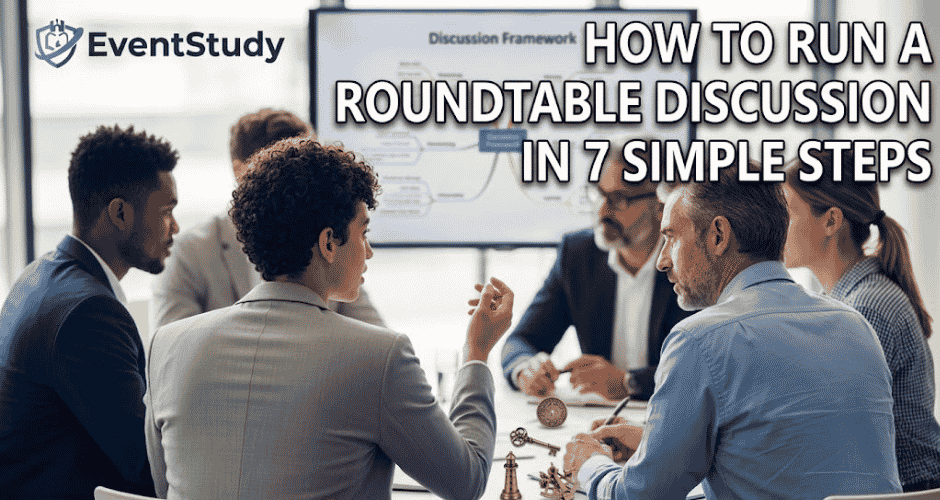
How to Run a Roundtable Discussion in 7 Simple Steps
-
May 24, 2026
-
Updated: July 20, 2026
- Event Industry Insights
Roundtable sessions serve as incredible tools for deep collaboration. Leaders, academics, and experts gather around a single topic to trade perspectives. This specific event style strips away the hierarchy of traditional presentations. Everyone sits as peers, and every voice carries equal weight.
Planning an effective roundtable requires careful strategy and thoughtful design. Without a clear framework, these events easily spiral into chaotic, unproductive debates. Setting the stage correctly transforms an ordinary group discussion into an engine for innovation.
Creating a seamless experience demands strict attention to detail from start to finish. This comprehensive guide outlines everything needed to prepare, manage, and wrap up a highly successful meeting.
What is a Roundtable Discussion?
A roundtable discussion is a unique meeting format where participants gather to discuss a specific topic as equals. The term originates from the legendary Arthurian round table, symbolizing that no individual occupies the head seat. Unlike a typical panel discussion or conference presentation, there is no distinct separation between an active speaker and a passive audience.
Every single invitee acts as both a contributor and a listener. The format prioritizes democratic dialogue, shared insights, and peer-to-peer learning over one-way lectures. These sessions thrive on open dialogue, mutual respect, and collaborative problem-solving.
Why Should You Host a Roundtable Event?
Hosting this type of event uncovers deeper perspectives than regular meetings can offer. Bringing a diverse group of stakeholders together sparks unexpected breakthroughs and fosters strong industry networks.
Why Should You Host a Roundtable Event?
Traditional corporate layouts naturally establish a strict chain of command. Roundtable sessions remove these artificial barriers completely. A junior designer can share ideas directly with a senior executive without hesitation. This level playing field makes participants feel safe, valued, and highly motivated to contribute authentic viewpoints.
Fostering True Collaboration
Brainstorming sessions often become dominated by the loudest voices in the room. A structured roundtable layout prevents this dominance by encouraging balanced participation. The cooperative environment allows complex ideas to build upon one another, leading to comprehensive solutions that a single person could not generate alone.
Building Strategic Professional Networks
High-level experts love participating in these close-knit gatherings. The intimate nature of the setup helps attendees build genuine bonds rather than superficial connections. Professionals leave the room with trusted new contacts, fresh insights, and potential partnership opportunities for future projects.
Explore experiential event ideas with Event Study that captivate audiences, boost engagement, strengthen brand connections, and create memorable attendee experiences.
How to Plan a Successful Roundtable Conference
Flawless execution requires rigorous planning long before the actual event day arrives. Clear objectives and perfect logistical choices lay the foundation for a seamless experience.
Defining Strategic Goals
Establish the core purpose of your event before sending out invitations. Determine if your primary goal is solving a specific industry problem, gathering feedback on a product, or exploring academic research. Clear objectives shape the entire agenda and dictate which discussion prompts will yield the best insights.
Choosing the Ideal Participant Count
Keep your attendee list limited to maintain high quality. Invite between 5 and 12 participants to ensure everyone gets adequate speaking time. Exceeding 12 people makes the conversation chaotic and prevents quieter attendees from sharing their thoughts effectively.
Selecting the Right Format: Physical, Virtual, or Hybrid
Decide whether a physical or virtual roundtable event fits your audience best. Physical events need a spacious room with a literal circular table setup so attendees can make eye contact easily. Online events rely on secure digital software like Zoom or Microsoft Teams. Virtual platforms require utilizing breakout rooms and digital whiteboards to mimic physical interactions smoothly.
Discover how to structure corporate gatherings for long-term value with Event Study, creating stronger relationships, meaningful engagement, and lasting business opportunities.
Step-by-Step Guide to Managing Roundtable Sessions
Running the session smoothly depends heavily on strong moderation, clear boundaries, and structured timing.
Preparing a Timed Agenda
Draft a highly detailed timeline and distribute it to all attendees a few days in advance. Dedicate the first few minutes to introductions, allocate specific time blocks for your core discussion topics, and preserve the final section for a conclusion. A structured agenda sets realistic expectations and keeps conversations from drifting off-course.
Establishing Firm Ground Rules
Open your meeting by clearly stating the behavioral expectations. Instruct participants to actively listen, avoid interrupting their peers, and leave personal biases at the door. Emphasize that the space relies on constructive critique, mutual respect, and focused problem-solving.
Crafting High-Quality Open-Ended Questions
Prepare a list of thoughtful prompts that require deep explanation. Avoid basic questions that lead to simple “yes” or “no” answers. Ask questions such as, “What hidden challenges do we expect when adopting this new strategy?” or “How can our industry pivot to address these changing regulations?” These questions prompt analytical thinking and inspire diverse viewpoints.
Course Suggestion: Event Coordination for Corporate Functions
The Event Coordination for Corporate Functions course from Event Study teaches you how to plan and manage professional business events. Learn to handle venues, logistics, and execution to deliver smooth and successful corporate events.
The Vital Role of an Effective Roundtable Moderator
The moderator acts as the ultimate custodian of the conversation, keeping the dialogue flowing naturally without ever controlling the outcome.
Guiding the Conversation Neutrality
Excellent facilitators remain strictly neutral throughout the entire session. Your job centers on guiding the natural flow of conversation, not inserting your personal opinions. Listen closely to what people say, connect related ideas together, and smoothly transition to the next topic when a thread burns out.
Balancing the Room Dynamics
Domineering personalities frequently try to take over open conversations. Intervene politely by saying, “That is a fascinating point, let us hear what others think about that.” Actively invite introverted participants into the dialogue by asking for their specific expertise. Ensuring everyone speaks equally preserves the democratic spirit of the event.
Keeping Strict Control of the Clock
Time flies by quickly when debates grow intense. Monitor your watch closely to ensure every major agenda point gets sufficient attention. Move the group forward firmly but gently when a single topic begins to stall the entire meeting.
Learn how UK businesses use events for growth with Event Study, building stronger client relationships, increasing brand visibility, and creating valuable networking opportunities.
Post-Event Actions: Maximizing the Value of Your Session
The work continues after the final participants leave the room. Proper follow-up cements the value of the insights generated during the meeting.
Summarizing the Core Insights
Spend the final five minutes of the meeting recapping the major takeaways, notable consensus points, and unresolved questions. Document these items clearly in written meeting minutes or compile them into a professional executive summary.
Distributing Actionable Next Steps
Send a personalized follow-up email to all attendees within 48 hours. Include the detailed summary notes, links to the session recording, and a list of assigned action items. Expressing genuine gratitude for their time transforms a single conversation into long-term professional relationships.
Key Differences: Roundtable Debate vs. Panel Discussion
Understanding how these formats differ ensures you choose the right style for your specific audience goals.
Roundtable Discussion vs Panel Discussion
Feature
Roundtable Discussion
Panel Discussion
Hierarchy
Completely flat; all attendees are equal peers.
Split; distinct experts speak to a passive audience.
Participation
Everyone contributes to the conversation.
Only selected panelists speak; audience listens.
Layout
Circular seating or shared digital screen.
Stage facing rows of audience seats.
Primary Goal
Collaborative problem-solving and networking.
Knowledge dissemination and entertainment.
What is the ideal duration for a roundtable session?
Most successful events run between 60 and 90 minutes. This timeframe provides plenty of space for deep conversation without causing mental fatigue for the attendees.
How do you handle a participant who dominates the conversation?
Intervene with polite firmness during a natural pause. Use phrases like, “Thank you for sharing that perspective, now I want to ensure we hear from the rest of the table on this issue.”
Can you run an academic roundtable format online?
Yes, virtual platforms make academic roundtables highly accessible. Utilize digital hand-raising features, shared view screens, and chat boxes to keep the academic debate highly organized and respectful.
Should the audience be allowed to ask questions?
Including an audience works well if you allocate a specific Q&A segment at the end. Keep the main discussion strictly between the core table participants during the first two-thirds of the event to maintain focus.
What is the best way to choose a roundtable topic?
Select a highly relevant, timely, and slightly controversial industry issue. The ideal topic should lack a single easy answer, which naturally requires diverse expert opinions to solve.
Conclusion
Mastering the art of the roundtable discussion rewards organizations with brilliant ideas and tightly knit professional communities. Success relies entirely on meticulous planning, balanced moderation, and actionable follow-up. Creating an environment where every voice matters unlocks the collective intelligence of the entire room. Use these steps to transform your next meeting into a powerful, collaborative experience that drives real results.
Sign up to receive our latest updates
Get in touch
Call us directly?
020 8904 8326
Address
63 Cowcross St, Islington, London EC1M 6BP, United Kingdom
info@eventstudy.org.uk
Need some help?
Popular categories