
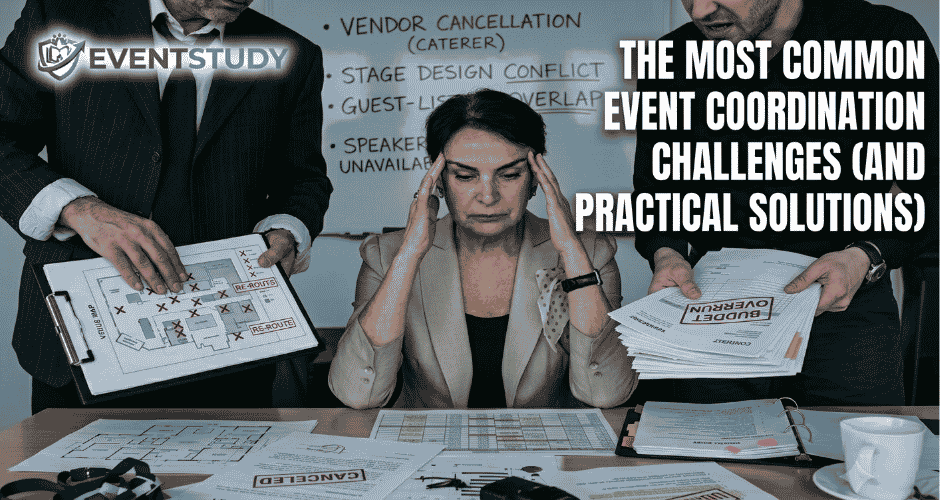
The Most Common Event Coordination Challenges (And Practical Solutions)
-
July 6, 2026
-
Updated: July 20, 2026
- Event Industry Insights
Expert Summary
Every successful event depends on effective coordination between venues, suppliers, speakers, staff, and attendees. Even experienced planners encounter unexpected challenges, but proper preparation and contingency planning can prevent small issues from becoming major disruptions.
In this guide you’ll learn:
- The biggest coordination challenges
- Why they happen
- Professional solutions
- Prevention strategies
- Emergency planning tips
- Best practices for smoother event delivery
Event coordination is often described as the engine behind successful events. While attendees only experience the finished product, coordinators manage hundreds of moving parts behind the scenes, including suppliers, venues, schedules, logistics, staffing, technology, and guest communication. When one element falls behind, the effects can quickly spread throughout the entire event.
Understanding the most common coordination challenges—and knowing how to respond—helps organisers minimise disruption, protect budgets, and deliver a positive attendee experience.
Communication Breakdowns
Poor communication is one of the most common reasons events experience delays, budget overruns, and operational problems. Clear, consistent communication keeps suppliers, staff, and stakeholders aligned throughout the planning process.
Common Communication Problems
Supplier Misunderstandings: Vendors may receive incorrect setup times, delivery instructions, or technical requirements, leading to delays or service issues.
Team Confusion: Staff and volunteers may be unclear about their roles, responsibilities, or schedules, reducing efficiency on event day.
Missing Updates: Important changes to timelines, venue layouts, or guest numbers may not reach everyone involved.
Delayed Approvals: Slow decision-making can postpone bookings, marketing activities, and operational planning.
Why It Happens
Communication breakdowns often occur because:
Too many communication channels are used (emails, phone calls, messaging apps, and spreadsheets).
No central project manager coordinates information and approvals.
Poor documentation results in outdated schedules, missing instructions, or conflicting information.
Professional Solution
Experienced event planners reduce communication issues by:
Using one communication platform for all project updates.
Holding daily briefing meetings during the final planning stages and event week.
Maintaining shared planning documents with the latest schedules, contacts, and checklists.
Assigning clear responsibilities so every team member knows who is responsible for each task.
Expert Tip: Assign one person to approve all operational decisions to avoid conflicting instructions. A single decision-maker improves accountability, speeds up communication, and ensures everyone works from the same plan.
Last-Minute Schedule Changes
Last-minute schedule changes are common in event management and can disrupt operations if they are not handled quickly and effectively. A flexible plan and clear communication help minimise their impact on attendees and event staff.
Speaker Delays
Speakers may arrive late due to travel disruptions, traffic, or flight delays. This can leave gaps in the programme and affect attendee engagement.
Agenda Changes
Sessions may need to be extended, shortened, or rearranged because of timing issues, technical problems, or changes in event priorities. Without proper communication, these changes can confuse attendees and staff.
Venue Restrictions
Unexpected venue issues, such as room availability, noise limitations, or access restrictions, may require organisers to modify the event schedule or relocate activities at short notice.
Weather Disruptions
Outdoor events are particularly vulnerable to rain, strong winds, extreme heat, or storms. Weather conditions may delay performances, affect setup, or require activities to be moved indoors.
Professional Solution
Experienced event planners prepare for schedule changes by:
Creating flexible schedules with built-in buffer time between key activities.
Arranging backup speakers or alternative entertainment to fill unexpected gaps.
Allowing buffer time for setup, travel, and session transitions to reduce delays.
Using real-time attendee notifications through event apps, SMS, email, or digital displays to communicate schedule changes quickly and accurately.
Planning for flexibility helps organisers maintain a smooth event experience, even when unexpected changes occur.
Supplier Coordination Problems
Suppliers play a vital role in event success, but coordination issues can quickly disrupt schedules, increase costs, and affect the attendee experience. Clear communication and proactive planning help minimise these risks.
Common Supplier Problems
Late Deliveries: Equipment, catering, or event materials arrive behind schedule, delaying setup and event operations.
Missing Equipment: Essential items such as staging, furniture, AV equipment, or signage are incomplete or forgotten.
Incorrect Orders: Suppliers deliver the wrong products, quantities, or specifications, creating operational challenges.
Staffing Shortages: Catering teams, technicians, security personnel, or support staff arrive with fewer people than agreed.
Professional Solutions
Experienced event planners reduce supplier issues by following proven coordination practices:
Confirm Deliveries 72 Hours Before: Contact every supplier three days before the event to verify delivery times, quantities, locations, and setup requirements.
Use Written Contracts: Document all services, deadlines, pricing, equipment lists, and responsibilities to prevent misunderstandings.
Maintain Backup Suppliers: Identify alternative vendors who can provide emergency support if a supplier cancels or fails to deliver.
Use Arrival Checklists: Check every delivery against an inventory list as suppliers arrive to ensure nothing is missing or incorrect.
Strong supplier management reduces delays, improves accountability, and helps ensure the event runs smoothly from setup to breakdown.
Venue Challenges
The venue is the foundation of every event, but operational limitations can create unexpected challenges if they are not identified during the planning stage. Conducting thorough site inspections helps organisers address potential issues before event day.
Limited Access
Some venues have restricted entry points or limited access hours for suppliers and event staff. This can delay setup and breakdown if deliveries are not carefully scheduled.
Power Shortages
Large events often require more electricity than a venue’s standard supply can provide. Insufficient power may affect lighting, sound systems, catering equipment, and exhibitor booths unless additional generators or temporary power distribution are arranged.
Loading Restrictions
Many venues have designated loading times, limited loading docks, or restrictions on large vehicles. Poor coordination can lead to delivery delays and longer setup times.
Parking
Limited parking for attendees, vendors, and staff can cause congestion and delays. A parking management plan, shuttle services, or alternative parking locations can improve access.
Internet Issues
Weak or unreliable internet connections can disrupt registration systems, payment terminals, live streaming, event apps, and presentations. Always test connectivity and arrange dedicated internet services if required.
Capacity Limits
Exceeding the venue’s approved capacity creates safety risks and may violate local regulations. Confirm maximum occupancy and plan layouts that allow comfortable crowd movement and emergency access.
Site Inspection Checklist
Before confirming a venue, verify the following:
☐ Power outlets are sufficient for all equipment
☐ Wi-Fi coverage and internet speed meet event requirements
☐ Accessibility features are available for all attendees
☐ Emergency exits are clearly marked and unobstructed
☐ Loading dock or delivery access is suitable for suppliers
☐ Storage space is available for equipment and supplies
☐ AV systems are compatible with your production requirements
Completing a detailed site inspection helps identify operational risks early, allowing organisers to resolve issues before they affect the event.
Budget Constraints
Budget constraints are one of the biggest challenges in event planning. Rising costs, unexpected expenses, and changing event requirements can quickly put pressure on the available budget if they are not managed carefully.
Rising Supplier Costs
Supplier prices may increase due to inflation, higher demand, or rising labour and transportation costs. Catering, venue hire, equipment rentals, and production services are particularly affected. Reviewing supplier quotes regularly and securing fixed-price contracts where possible can help reduce financial risk.
Unexpected Expenses
Even well-planned events can face unforeseen costs, such as emergency equipment rentals, additional security, weather-related changes, or overtime payments. Without financial flexibility, these expenses can disrupt the entire budget.
Scope Creep
Adding new features, upgrading services, or expanding the event after planning has begun increases costs and often leads to budget overruns. Every requested change should be evaluated to determine whether it supports the event’s objectives and fits within the approved budget.
Professional Solutions
Experienced event planners keep budgets under control by using proven financial management practices:
Maintain a Contingency Fund: Reserve 5–10% of the total budget to cover unexpected costs without affecting essential services.
Track the Budget Regularly: Monitor expenses throughout the planning process and compare actual spending against the approved budget.
Prioritise Spending: Allocate funds to activities that deliver the greatest value for attendees and support the event’s goals.
Request Competitive Quotes: Compare multiple supplier quotations to secure the best combination of price, quality, and service.
Careful budgeting, regular financial reviews, and disciplined decision-making help organisers control costs while delivering a successful event.
Technology Failures
Technology is essential for modern events, but technical problems can quickly disrupt presentations, attendee registration, and overall event operations. Thorough preparation and backup plans help minimise downtime and keep the event running smoothly.
Audio Issues
Microphones, speakers, or sound systems may produce poor audio quality, feedback, or complete failure. These issues can interrupt presentations and reduce the attendee experience.
Live Stream Problems
Hybrid and virtual events may experience streaming interruptions due to software errors, insufficient bandwidth, or equipment failures. This can prevent remote attendees from accessing the event.
Registration Failures
Online registration systems, QR code scanners, or ticketing platforms may stop working because of software glitches or internet connectivity problems, resulting in long queues and delayed entry.
Presentation Compatibility
Speakers may arrive with presentation files that are incompatible with the venue’s computers or display systems. Missing fonts, unsupported file formats, or outdated software can delay sessions.
Internet Outages
Internet failures can affect payment systems, event apps, live streaming, registration, and communication between staff. Events that rely heavily on digital services should prepare for connectivity issues.
Professional Solutions
Experienced event planners reduce technology risks by following these best practices:
Test All Equipment: Check audio, lighting, projectors, internet, and presentation systems before the event begins.
Prepare Backup Laptops: Keep fully configured backup computers with essential software and presentation files ready for immediate use.
Enable Offline Registration: Prepare printed attendee lists or offline check-in systems in case internet access is lost.
Keep Spare Microphones: Have extra wired and wireless microphones, batteries, and audio cables available for quick replacement.
Conduct Technical Rehearsals: Run complete rehearsals with speakers, technicians, and production teams to identify and resolve issues before attendees arrive.
Proactive testing, reliable backup equipment, and well-prepared technical teams help ensure technology supports the event instead of becoming a source of disruption.
Staff Coordination
A well-coordinated team is essential for delivering a successful event. When staff and volunteers are not properly organised, operations can slow down, communication can break down, and the attendee experience may suffer.
Common Staff Coordination Problems
Volunteers Arriving Late
Late arrivals can leave registration desks, information booths, and other operational areas understaffed. This often results from unclear schedules, poor communication, or insufficient reminders.
Unclear Responsibilities
When team members do not understand their duties, important tasks may be duplicated or overlooked. Confusion over roles can also delay decision-making and reduce overall efficiency.
Poor Communication
Staff may miss schedule updates, venue changes, or emergency instructions if communication channels are inconsistent or disorganised. This can lead to operational errors and slower responses to issues.
Professional Solutions
Experienced event managers improve staff coordination by implementing structured management practices:
Provide a Staff Handbook: Give every team member a handbook with schedules, venue maps, contact details, emergency procedures, and role descriptions.
Hold Team Briefings: Conduct briefing sessions before the event and at the start of each day to share updates, priorities, and operational changes.
Appoint Department Leaders: Assign supervisors for areas such as registration, security, logistics, and technical operations to improve accountability and communication.
Use Radio Communication: Equip key staff with two-way radios or reliable communication devices to enable instant coordination across the venue.
Well-trained teams, clear leadership, and consistent communication help ensure staff work together efficiently and respond quickly to any challenges during the event.
Attendee Management
Effective attendee management is essential for creating a positive event experience. Poor organisation can lead to frustration, delays, and safety concerns, while well-managed attendee flow improves satisfaction and operational efficiency.
Long Queues
Long lines at entrances, registration desks, or food stations can frustrate attendees and delay the event schedule. They are often caused by slow check-in processes or insufficient staffing.
Registration Delays
Manual registration, technical issues, or incomplete attendee information can create bottlenecks during check-in. Delays at the entrance can negatively affect first impressions.
Seating Confusion
Unclear seating arrangements or poor venue layouts may cause attendees to struggle to find their seats. This can delay sessions and create unnecessary congestion.
Accessibility
Events should be accessible to all attendees, including those with disabilities. Limited wheelchair access, inadequate signage, or inaccessible facilities can reduce participation and create compliance issues.
Crowd Movement
Poorly planned walkways, entry points, and exit routes can result in congestion and safety risks, particularly during busy periods or emergency situations.
Professional Solutions
Experienced event planners improve attendee management by implementing practical systems such as:
Digital Check-In: Use QR codes, mobile tickets, or self-service kiosks to speed up registration and reduce waiting times.
Multiple Registration Desks: Open separate check-in counters based on attendee type or surname to distribute crowds more efficiently.
Clear Signage: Install visible directional signs for registration, seating, restrooms, exits, and key event areas.
Event Apps: Provide schedules, venue maps, session updates, and notifications through a mobile event app to help attendees navigate the event.
Queue Management: Use barriers, dedicated staff, and clearly marked waiting areas to organise lines and maintain smooth crowd flow.
Well-planned attendee management creates a seamless arrival experience, improves safety, and helps ensure guests enjoy the event from start to finish.
Emergency Situations
Unexpected emergencies can occur at any event, regardless of its size or level of preparation. Having a clear response plan helps protect attendees, minimise disruption, and ensure the event team can act quickly and confidently.
Medical Incidents
Attendees, staff, or performers may experience illness or injury during the event. Quick access to first aid, medical personnel, and emergency services is essential to provide immediate assistance.
Fire Alarms
A fire alarm or fire-related incident may require the venue to be evacuated. Staff should understand evacuation procedures and be able to guide attendees safely to designated assembly areas.
Severe Weather
Outdoor events may be affected by heavy rain, strong winds, lightning, or extreme temperatures. Weather-related emergencies can delay activities, damage equipment, or create safety risks for attendees.
Security Concerns
Security incidents such as unauthorized access, disruptive behaviour, or suspicious activities require a fast and coordinated response. Security personnel should monitor the venue and follow established incident procedures.
Speaker Cancellations
A speaker or performer may cancel due to illness, travel delays, or other unforeseen circumstances. Without a backup plan, programme schedules can be disrupted and attendee expectations affected.
Professional Solutions
Experienced event organisers prepare for emergencies by implementing the following measures:
Emergency Response Plan: Develop written procedures for medical emergencies, evacuations, severe weather, and security incidents.
Staff Training: Train staff and volunteers on emergency roles, communication procedures, and evacuation routes before the event.
Venue Coordination: Work closely with venue management, security teams, and emergency services to ensure response plans are aligned.
Incident Reporting: Record all incidents accurately to support follow-up actions, legal compliance, and future event improvements.
Backup Speakers: Arrange alternative speakers, performers, or flexible programme content to minimise disruption if cancellations occur.
Preparing for emergencies in advance allows organisers to respond quickly, protect attendees, and maintain event operations as safely and efficiently as possible.
Maintaining Stakeholder Expectations
Successful events depend on strong relationships with stakeholders. Keeping clients, sponsors, speakers, suppliers, and venue managers informed throughout the planning process builds trust, prevents misunderstandings, and ensures everyone works toward the same objectives.
Clients
Clients expect the event to meet agreed goals, stay within budget, and be delivered on time. Regular progress updates and transparent communication help build confidence and avoid unexpected surprises.
Sponsors
Sponsors want to receive the branding, visibility, and promotional opportunities promised in their agreements. Share campaign updates, activation plans, and post-event performance reports to demonstrate value.
Speakers
Speakers need clear information about schedules, travel arrangements, presentation requirements, and venue logistics. Providing timely updates helps them prepare and reduces the risk of last-minute issues.
Suppliers
Suppliers rely on accurate schedules, delivery instructions, and operational details to provide their services efficiently. Consistent communication helps prevent delays, incorrect deliveries, and service disruptions.
Venue Managers
Venue managers coordinate access, safety procedures, technical services, and facility operations. Maintaining regular contact ensures the venue is fully prepared and any operational concerns are addressed early.
Best Practices for Managing Expectations
Experienced event planners keep stakeholders aligned by following these practices:
Provide Progress Reports: Share regular updates on planning milestones, budgets, timelines, and key decisions.
Hold Regular Meetings: Schedule consistent meetings or check-ins to review progress, discuss challenges, and answer questions.
Define Clear Deliverables: Document responsibilities, deadlines, and expected outcomes so everyone understands their commitments.
Manage Expectations Early: Be realistic about budgets, timelines, and potential challenges. Address concerns promptly and communicate any changes before they become problems.
Consistent communication and proactive expectation management strengthen stakeholder relationships and contribute to a more successful event.
Visual Summary: Common Event Management Challenges
The table below summarises the most common event management challenges, their potential impact, and practical strategies to prevent them.
| Challenge | Potential Impact | Prevention Strategy |
|---|---|---|
| Communication issues | Delays, confusion, and missed updates | Use a central communication plan and one project management platform |
| Supplier delays | Schedule disruption and delayed setup | Confirm deliveries in advance and maintain backup suppliers |
| Technology failures | Poor attendee experience and operational interruptions | Test all equipment and prepare backup devices and systems |
| Budget overruns | Reduced return on investment (ROI) | Monitor the budget regularly and approve changes carefully |
| Venue restrictions | Operational delays and logistical issues | Conduct early site inspections and confirm venue requirements |
| Staffing shortages | Reduced service quality and slower operations | Cross-train staff and prepare contingency staffing plans |
| Schedule changes | Session delays and programme disruption | Build buffer time into the agenda and maintain a flexible schedule |
| Emergency incidents | Safety risks and event interruptions | Develop emergency response procedures and train all staff |
Lessons Experienced Event Coordinators Learn
Successful event coordinators know that smooth events are the result of careful preparation, clear communication, and proactive problem-solving. These practical lessons are gained through experience and can help organisers avoid common mistakes.
Every Event Needs Contingency Time
No event runs exactly as planned. Build extra time into setup, rehearsals, speaker transitions, and breakdown schedules to accommodate unexpected delays without affecting the overall programme.
Written Confirmations Reduce Misunderstandings
Always confirm bookings, delivery times, equipment lists, and special requests in writing. Emails, contracts, and signed agreements provide a clear reference and reduce the risk of costly misunderstandings.
Site Visits Reveal Problems Floor Plans Cannot
A venue layout may look perfect on paper, but an on-site inspection can uncover issues such as limited power outlets, narrow loading areas, poor Wi-Fi coverage, restricted access, or inadequate storage space. Visiting the venue before the event helps identify and resolve these challenges early.
One Decision-Maker Prevents Conflicting Instructions
Assign a single event lead to approve operational decisions. This ensures consistent communication, prevents conflicting instructions, and allows the team to respond quickly when changes are needed.
Contingency Budgets Are Essential
Unexpected expenses are inevitable, whether due to weather, equipment failures, or last-minute requests. Setting aside 5–10% of the total budget helps organisers manage unforeseen costs without compromising the event.
Small Communication Issues Can Become Major Operational Problems
A missed email, an outdated schedule, or unclear instructions may seem minor but can quickly lead to supplier delays, staffing confusion, or programme disruptions. Regular updates, shared planning documents, and clear communication channels help prevent small issues from escalating.
These lessons highlight that successful event coordination is not just about reacting to problems—it’s about anticipating them and putting practical systems in place before the event begins.
Frequently Asked Questions
1. What is the biggest challenge in event coordination?
One of the biggest challenges is managing multiple moving parts at the same time. Coordinators must keep suppliers, staff, venues, speakers, and attendees aligned while staying on schedule and within budget.
2. How do event coordinators handle last-minute problems?
Professional coordinators prepare contingency plans before the event. They use backup suppliers, flexible schedules, emergency procedures, and clear communication to resolve issues quickly with minimal disruption.
3. Why is communication important in event coordination?
Effective communication ensures everyone understands their responsibilities, timelines, and any changes to the event plan. Clear communication reduces misunderstandings, prevents delays, and improves teamwork.
4. How can technology improve event coordination?
Technology streamlines many event operations through digital registration, project management software, event apps, scheduling tools, real-time messaging, and budget tracking. These tools improve efficiency and help teams stay organised.
5. What contingency plans should every event have?
Every event should prepare backup plans for severe weather, medical emergencies, equipment failures, supplier cancellations, staffing shortages, internet outages, power failures, and schedule changes. Having documented procedures allows the team to respond quickly and confidently.
6. How do coordinators manage multiple suppliers?
Event coordinators use written contracts, shared timelines, regular progress meetings, delivery schedules, and a central communication platform to keep suppliers informed. They also confirm key details before the event and maintain backup vendors whenever possible.
7. How far in advance should event coordination begin?
The planning timeline depends on the event’s size and complexity. Small events may require 2–3 months of coordination, while conferences, festivals, and large public events often need 6–12 months or more to secure venues, suppliers, permits, and sponsors.
8. What skills are most important for an event coordinator?
Successful event coordinators need strong communication, organisation, leadership, time management, problem-solving, negotiation, and budgeting skills. Adaptability is also essential for handling unexpected challenges.
9. How do event coordinators keep events on schedule?
They create detailed timelines, assign clear responsibilities, monitor progress throughout the event, include buffer time between activities, and communicate schedule updates promptly to staff and stakeholders.
10. Can small events benefit from professional event coordination?
Yes. Even small events can benefit from structured coordination. Professional planning improves organisation, reduces stress, controls costs, and helps deliver a smoother experience for attendees.
Conclusion
Effective event coordination is about preparation, communication, and adaptability. Rather than simply reacting to problems, successful coordinators anticipate potential challenges and put practical systems in place to manage them before they affect the event. Clear communication, detailed planning, and proactive decision-making create a strong foundation for smooth event operations.
While unexpected challenges are inevitable, having well-defined processes, contingency plans, and strong collaboration between clients, suppliers, venue teams, and staff allows coordinators to respond confidently and minimise disruption. Regular progress reviews, documented procedures, and continuous monitoring also help keep projects on schedule and within budget.
Organisations that invest in thorough planning are better positioned to deliver successful, memorable experiences regardless of the obstacles they encounter. By treating every event as an opportunity to learn and refine future processes, event professionals can improve efficiency, strengthen stakeholder relationships, and consistently deliver high-quality results.
Sign up to receive our latest updates
Get in touch
Call us directly?
020 8904 8326
Address
63 Cowcross St, Islington, London EC1M 6BP, United Kingdom
info@eventstudy.org.uk
Need some help?
Popular categories