

What Is Event Vendor Management? A UK Beginner’s Guide
-
May 1, 2026
-
Updated: July 20, 2026
- Event Industry Insights
Expert Summary
Event vendor management is the process of selecting, contracting, coordinating, monitoring, and evaluating suppliers involved in an event. Effective vendor management helps organisers control budgets, reduce operational risks, improve communication, and ensure every supplier delivers according to agreed standards.
Key Takeaways
- Learn what vendor management involves
- Understand the complete supplier lifecycle
- Discover common vendor risks
- Learn UK compliance requirements
- Improve supplier communication
- Reduce event-day problems
Quick Answer
Event vendor management is the process of sourcing, managing, and evaluating suppliers throughout the event lifecycle. It includes selecting reliable vendors, negotiating contracts, coordinating deliveries, monitoring performance, and reviewing outcomes after the event.
Imagine organising a conference in London where the caterer arrives late, the AV supplier forgets essential cables, and security staff cannot enter because their paperwork is incomplete. Every one of these problems is a vendor management issue.
Event vendor management is the process of selecting, coordinating, monitoring, and evaluating every external supplier involved in delivering an event. In the UK, this includes ensuring vendors meet venue requirements, hold valid Public Liability Insurance (PLI), provide Risk Assessment Method Statements (RAMS), and deliver services according to agreed contracts and timelines.
Why Is Effective Vendor Management Essential?
Solid management transforms a group of independent companies into a unified team. This coordination is vital for several reasons.
Protecting Your Event Budget
Clear contracts and vetting prevent unexpected fees. You can avoid “scope creep” by defining exact deliverables from the start. Professional management ensures you get the best value for your spend.
Maintaining High Quality Standards
Setting clear expectations leads to better results. Vendors perform best when they understand your vision and the specific needs of your attendees. This consistency builds a professional reputation for your brand.
Mitigating Operational Risks
According to UK event industry practice, large conferences often involve 20–80 different suppliers, while festivals may coordinate hundreds of vendors across multiple departments. Effective documentation prevents costly delays during setup.
Vendor Management Benefits
| Without Vendor Management | With Vendor Management |
|---|---|
| Late deliveries | On-time setup |
| Budget overruns | Better cost control |
| Miscommunication | Clear responsibilities |
| Contract disputes | Defined expectations |
| Equipment failures | Backup plans |
| Poor attendee experience | Smooth event delivery |
Vendor Management Checklist
| Vendor | Primary Responsibility |
|---|---|
| Venue | Event location |
| Caterer | Food and beverage |
| AV Supplier | Audio and visuals |
| Photographer | Event coverage |
| Decorator | Venue styling |
| Security | Crowd safety |
| Furniture Hire | Tables and seating |
| Entertainment | Guest engagement |
| Cleaning | Venue turnover |
| Registration Provider | Guest check-in |
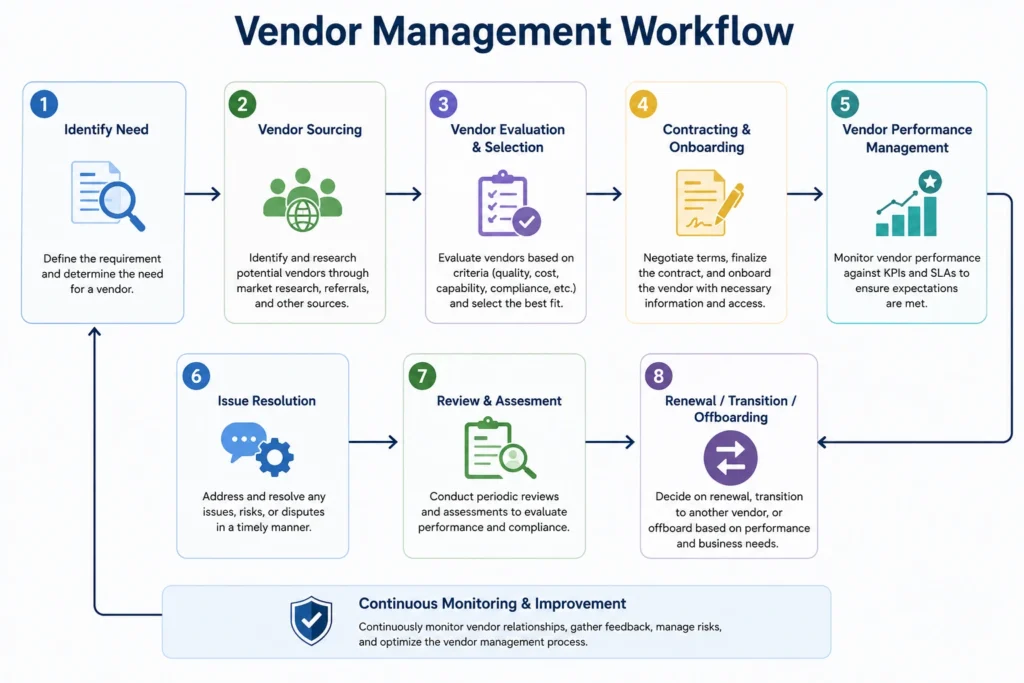
Vendor Management Process at a Glance
Research
↓
Shortlist Vendors
↓
Compare Quotes
↓
Negotiate Terms
↓
Sign Contracts
↓
Collect Required Documents
↓
Coordinate Setup & Logistics
↓
Manage Vendors During the Event
↓
Review Performance & Provide Feedback
Key Stages of the Vendor Management Lifecycle
Step 1 — Research Vendors
Begin by identifying vendors that match your event’s needs, budget, location, and overall vision. Research multiple suppliers by reviewing their websites, portfolios, testimonials, and previous work to assess the quality of their services. Read independent reviews, ask for recommendations, and verify that each vendor has experience with events similar to yours. It’s also important to confirm their availability for your event date before investing more time in discussions. Taking the time to thoroughly research vendors reduces risk, improves decision-making, and helps you build a shortlist of dependable suppliers.
Best Practice:
Create a vendor scoring sheet that rates each supplier on key criteria such as experience, communication, pricing, customer reviews, reliability, service quality, and availability. Using consistent evaluation criteria makes it easier to compare vendors objectively.
Example:
If you’re planning a corporate conference, compare three catering companies by reviewing their menus, pricing, online ratings, food safety certifications, and previous corporate event experience before deciding which vendors to invite for quotations.
Step 2 — Compare Quotes
Once you have shortlisted potential vendors, request detailed quotations from each supplier. Compare not only the total cost but also the services included, payment terms, cancellation policies, delivery timelines, and any additional fees. A lower price may not always represent the best value if important services are excluded or the vendor lacks experience. Carefully reviewing each proposal ensures you choose a supplier that offers the best balance of quality, reliability, and cost.
Best Practice:
Compare quotes using a standard checklist or spreadsheet that includes pricing, included services, experience, response time, contract terms, and customer reviews. This helps you make an objective and well-informed decision.
Example:
When selecting a photographer, one vendor may charge slightly more but include a second photographer, edited images, and faster delivery. Comparing the full package—not just the price—helps you choose the option that offers greater overall value.
Step 3 — Negotiate Contracts
Before signing any agreement, discuss all important contract terms with your chosen vendor. This includes pricing, payment schedules, cancellation and refund policies, delivery and setup times, service expectations, and any additional charges that may apply. Don’t hesitate to negotiate where appropriate, especially for package deals or multiple services. Ensure every agreed detail is clearly documented in writing to prevent misunderstandings and protect both parties throughout the event.
Best Practice:
Review every contract carefully before signing and confirm that all verbal agreements are included in writing. Pay special attention to payment terms, cancellation clauses, liability, and the scope of services.
Example:
When hiring an event decorator, negotiate the setup and removal times, decoration specifications, payment milestones, and contingency plans for damaged or unavailable items. Including these details in the contract helps avoid disputes on the event day.
Step 4 — Collect Documents
Once contracts have been signed, collect and organise all essential documents from each vendor. These may include signed agreements, invoices, payment receipts, insurance certificates, business licences, permits, tax documents, and emergency contact details. Keeping accurate records in one place makes it easier to manage your event, track payments, verify compliance, and quickly access important information if any issues arise.
Best Practice:
Create a digital folder for each vendor and store all contracts, invoices, certificates, and correspondence in one organised location. Back up these files to cloud storage so they remain accessible throughout the planning process.
Example:
For your catering vendor, maintain a folder containing the signed contract, final menu, proof of public liability insurance, payment schedule, food safety certification, and the event manager’s contact details so everything is readily available on the event day.
Step 5 — Coordinate Setup
As the event approaches, work closely with each vendor to confirm all logistical arrangements. Verify arrival and departure times, venue access procedures, loading and unloading areas, equipment requirements, setup schedules, and contact details for key personnel. Sharing a detailed event timeline with every supplier helps ensure everyone understands their responsibilities and reduces the risk of delays or miscommunication on the day of the event.
Best Practice:
Schedule a final coordination meeting or confirmation call with all vendors a few days before the event. Review the event timeline, setup sequence, emergency contacts, and contingency plans so everyone is fully prepared.
Example:
For a corporate conference, coordinate with the audiovisual team, caterer, decorator, and venue manager to ensure equipment is installed before attendees arrive, catering is delivered on schedule, and all setup activities are completed according to the event timeline.
Step 6 — Evaluate Performance
Once the event has concluded, take time to evaluate each vendor’s performance. Assess how well they met deadlines, communicated throughout the planning process, delivered their services, handled unexpected challenges, and fulfilled the terms of their contract. Gathering feedback from your event team and attendees can also provide valuable insights. Documenting your findings helps you identify reliable suppliers, improve future vendor selection, and build long-term partnerships with high-performing vendors.
Best Practice:
Create a post-event evaluation form that scores each vendor on criteria such as communication, punctuality, service quality, professionalism, flexibility, and value for money. Keep these records for future event planning.
Example:
After a gala dinner, review the performance of the catering company, photographer, entertainment provider, and venue staff. Record what went well, note any issues encountered, and add your top-performing vendors to a preferred supplier list for future events.
Tips for Success in the UK Market
The British events landscape has specific expectations for professionalism. Use these strategies to stay ahead.
Define Your Scope First
List every requirement before contacting any external company. Knowing your technical needs and quantities prevents miscommunication. This clarity makes the bidding process much faster.
Centralise Your Documentation
Store all contacts, contracts, and timelines in one place. Digital tools allow you to access vital information while you are on the move. A single source of truth prevents data loss.
Build in Time Buffers
Setup tasks often take longer than planned. Add extra time to your schedule for deliveries and equipment testing. These buffers reduce stress during the high-pressure hours before an event starts.
Understand the importance of vendor management in UK events, including planning clarity, centralised systems, time buffers, and ensuring smooth, professional event delivery.
Essential Documents Checklist
| Document | Required |
|---|---|
| Contract | ✔ |
| Quote | ✔ |
| Invoice | ✔ |
| Public Liability Insurance | ✔ |
| RAMS | ✔ |
| PAT Certificate | If applicable |
| Food Hygiene Certificate | Caterers |
| SIA Licence | Security |
| Contact List | ✔ |
Signs a Vendor May Become a Problem
Choosing the right vendors is one of the most important parts of successful event planning. Identifying warning signs early can help you avoid delays, unexpected costs, and service issues. If a vendor displays several of the following behaviours, it may be worth considering other options before signing a contract.
-
Slow replies – Delayed responses may indicate poor communication or a lack of organisation, which can create problems during event planning.
-
Missing documents – Vendors who cannot provide licences, insurance certificates, or business information may not meet professional or legal standards.
-
Unclear quotations – Quotes that lack detailed pricing or clearly defined services can lead to misunderstandings and unexpected charges.
-
Frequent schedule changes – Constantly changing meeting times or deadlines may suggest poor time management and unreliable service.
-
Poor reviews – Consistently negative customer feedback or unresolved complaints can be a warning sign of ongoing service issues.
-
No insurance – Vendors without appropriate insurance may expose you to unnecessary financial and legal risks if something goes wrong.
-
Avoids contracts – A reluctance to provide or sign a written agreement is a major red flag, as it leaves important terms and responsibilities undocumented.
-
Unrealistically low pricing – Prices that are significantly lower than competitors may indicate hidden fees, lower-quality service, or a lack of experience.
Taking the time to identify these warning signs before hiring a vendor can help reduce risk, protect your event, and ensure you work with reliable professionals who can deliver a successful experience.
Common Challenges with Event Suppliers
Working with multiple suppliers is an essential part of event planning, but it can also create challenges that affect the event if they are not managed properly. Understanding these common issues allows planners to prepare solutions before problems arise.
Communication Gaps
Poor communication is one of the most common causes of event-day issues. Misunderstandings about arrival times, setup schedules, venue access, or service requirements can lead to delays and unnecessary stress. Regular check-ins, written confirmations, and a detailed event schedule help ensure everyone understands their responsibilities.
Compliance Issues
Many venues require suppliers to provide documentation such as public liability insurance, risk assessments, or relevant licences before they can begin work. If a vendor arrives without the required paperwork, they may be refused entry, delaying setup or disrupting the event. Collecting and verifying these documents well in advance helps avoid last-minute complications.
Equipment Failure
Technical equipment, including sound systems, lighting, projectors, or catering appliances, can sometimes malfunction during setup or the event itself. Having backup equipment, spare cables, emergency contacts, and on-site technical support allows organisers to resolve issues quickly and minimise disruption to guests.
Last-Minute Cancellations
Unexpected cancellations due to illness, transport problems, or staffing shortages can leave critical services unavailable. Maintaining a list of trusted backup suppliers and including cancellation clauses in contracts can reduce the impact of these situations.
Delivery Delays
Traffic congestion, weather conditions, or logistical problems may prevent suppliers from arriving on time. Late deliveries can affect venue setup and the overall event schedule. Building extra time into the event timeline and confirming delivery arrangements in advance helps minimise this risk.
Budget Overruns
Unexpected charges, additional service requests, or hidden fees can cause event costs to exceed the planned budget. Carefully reviewing contracts, confirming all costs before signing, and maintaining a contingency budget can help keep spending under control.
| Vendor Type | Documents Required | Common Risks | Best Practice |
|---|---|---|---|
| Caterer | Food Hygiene, PLI | Late delivery | Site visit |
| AV Supplier | PAT Testing | Equipment failure | Technical rehearsal |
| Security | SIA Licence | Staffing shortage | Backup guards |
| Entertainment | Contract | Cancellation | Replacement performer |
Common Vendor Management Mistakes
❌ Choosing the Cheapest Supplier
Selecting a vendor based only on price can result in poor-quality service, unreliable performance, or unexpected additional costs. Always consider experience, reputation, and overall value as well as cost.
❌ Not Checking Insurance
Failing to verify that suppliers have appropriate insurance can expose organisers to financial and legal risks if accidents, injuries, or property damage occur during the event.
❌ No Written Contract
Relying on verbal agreements can lead to misunderstandings about services, payment terms, responsibilities, or cancellation policies. Always use a clear, signed contract.
❌ Last-Minute Bookings
Booking vendors too close to the event date limits your options and may increase costs. It can also make it difficult to secure experienced suppliers or arrange contingency plans.
❌ Poor Communication
Not providing clear instructions or regular updates can result in missed deadlines, incorrect deliveries, or scheduling conflicts. Consistent communication keeps everyone aligned throughout the planning process.
❌ No Backup Supplier
Unexpected cancellations or emergencies can leave essential services unavailable. Maintaining a list of alternative suppliers helps minimise disruption if a vendor cannot fulfil their commitment.
❌ Ignoring Venue Rules
Every venue has its own requirements regarding access times, insurance, equipment, noise levels, and health and safety procedures. Failing to inform vendors of these rules can cause delays, additional costs, or even prevent suppliers from working on-site.
Vendor Risk Matrix
| Risk | Likelihood | Impact |
|---|---|---|
| Late arrival | High | Medium |
| Equipment failure | Medium | High |
| Cancellation | Low | High |
| Communication failure | High | High |
| Missing documents | Medium | High |
| Budget overrun | Medium | Medium |
Example of Event Vendor Management
For a 500-person corporate conference in Manchester, the event organiser may need to coordinate a wide range of suppliers, each responsible for a different aspect of the event.
Typical vendors might include:
-
Venue
-
Catering company
-
AV production team
-
Stage and set design company
-
Photographer and videographer
-
Security provider
-
Registration and ticketing software provider
-
Cleaning contractor
-
Entertainment or keynote speakers
-
Signage and branding supplier
-
Furniture and equipment hire company
-
Wi-Fi and internet service provider
-
Floral decoration supplier
-
Transport and shuttle service
-
Event staffing agency
Each supplier has its own delivery schedule, contact person, setup requirements, and deadlines. For example, the stage must be built before the AV team installs equipment, while the caterer requires access to food preparation areas before guests arrive. If one supplier is delayed, it can affect the work of several others.
To keep everything running smoothly, the event manager creates a central event schedule that outlines setup times, delivery windows, contact details, venue access instructions, and contingency plans. Regular communication through emails, planning meetings, and event-day briefings ensures every supplier understands their responsibilities and works together efficiently.
Effective vendor management helps ensure the conference starts on time, stays within budget, and delivers a seamless experience for attendees.
Vendor Communication Timeline
| Timeline | Action |
|---|---|
| 8 weeks | Confirm suppliers |
| 6 weeks | Sign contracts |
| 4 weeks | Collect documents |
| 2 weeks | Confirm schedules |
| 1 week | Final briefing |
| Event day | Live coordination |
| After event | Performance review |
Course Suggestion: Event Vendor Management Training Course
The Event Vendor Management Training Course from Event Study teaches you how to source, manage, and coordinate vendors effectively. Learn negotiation, communication, and supplier management skills to deliver smooth, high-quality events with confidence.
Professional Vendor Management Tips
Successful vendor management goes beyond selecting the right suppliers. Following a few simple best practices can improve communication, reduce risks, and help your event run smoothly from start to finish.
-
Keep one master contact list – Maintain a single document containing the contact details of every vendor, venue representative, and key event team member for quick access.
-
Avoid verbal agreements – Always confirm important discussions in writing, including pricing, timelines, and service requirements, to prevent misunderstandings.
-
Always inspect equipment before guests arrive – Check audiovisual equipment, lighting, staging, furniture, and other essential items during setup to ensure everything is working correctly.
-
Confirm access times with venues – Verify loading, unloading, setup, and breakdown times with both the venue and vendors well in advance to avoid scheduling conflicts.
-
Build long-term supplier relationships – Working consistently with reliable vendors can improve communication, secure better pricing, and lead to higher-quality service over time.
-
Keep backup vendors – Maintain a list of trusted alternative suppliers who can step in if a vendor cancels, experiences delays, or is unable to deliver as agreed.
By following these professional vendor management practices, you can minimise disruptions, strengthen supplier relationships, and deliver successful events with greater confidence and efficiency.
Conclusion
Successful vendor management begins long before event day. By selecting reliable suppliers, maintaining clear communication, documenting every agreement, and evaluating performance after each event, organisers can reduce operational risks, strengthen supplier relationships, and consistently deliver high-quality events.
Frequently Asked Questions (FAQ)
What documentation do I need from UK vendors?
Most venues require Public Liability Insurance (PLI) and a Risk Assessment Method Statement (RAMS). You should also check for specific certifications like PAT testing for electrical equipment or food hygiene ratings for caterers.
How do I choose between two similar suppliers?
Check their past performance through testimonials or case studies. Reliability and communication style are often more valuable than a slightly lower price point.
When should I pay my event vendors?
Deposit structures vary, but a standard approach involves an initial deposit followed by a final payment after the event. Always ensure the payment schedule is clearly stated in your signed contract.
How do I handle a vendor who is underperforming?
Address the issue immediately with clear references to your agreed scope of work. Keeping a paper trail of all communications helps resolve disputes professionally.
How many vendors does an average event require?
The number of vendors depends on the size and type of event. Small events may require only 3–5 vendors, while medium-sized events often involve 8–15 suppliers. Large conferences, festivals, or exhibitions can require 20 or more vendors.
Should vendors sign NDAs?
Yes, if they will have access to confidential information such as guest lists, business plans, product launches, or financial data. A Non-Disclosure Agreement (NDA) helps protect sensitive information and clearly defines confidentiality obligations.
Who is responsible if a supplier damages the venue?
Responsibility is usually determined by the contract. In most cases, the supplier who caused the damage is liable, and their public liability insurance may cover the repair costs. Event organisers should always verify that vendors have appropriate insurance before the event.
Can one company provide multiple services?
Yes. Many event suppliers offer multiple services, such as catering, staging, lighting, sound, furniture hire, and event staffing. Using one supplier for several services can simplify communication and coordination, provided they have the expertise to deliver each service effectively.
What happens if a vendor cancels at the last minute?
A last-minute cancellation can disrupt an event, so organisers should have contingency plans in place. Keeping a list of backup suppliers, including cancellation clauses in contracts, and confirming arrangements before the event can help minimise disruption.
How often should vendor performance be reviewed?
Vendor performance should be evaluated after every event. Reviewing factors such as reliability, communication, punctuality, service quality, and professionalism helps improve future supplier selection and strengthens long-term partnerships.
Should freelancers be treated differently from vendors?
No. Freelancers should be managed with the same level of professionalism as other vendors. They should receive clear contracts, schedules, payment terms, and expectations, although their agreements may be simpler depending on the scope of work.
What software helps manage vendors?
Event professionals commonly use platforms such as Cvent, Eventbrite, Monday.com, Asana, Trello, and Airtable to organise vendor information, manage contracts, track tasks, schedule timelines, and improve communication throughout the planning process.
How many quotes should I collect before hiring a vendor?
It’s generally recommended to collect at least three quotes. Comparing multiple proposals helps you evaluate pricing, services, experience, and overall value before making a decision.
Can I negotiate vendor pricing?
Yes. Many vendors are open to negotiating prices, package options, payment terms, or additional services, especially for larger events or long-term partnerships.
How do I manage international suppliers?
Use clear contracts, schedule regular virtual meetings, account for time zone differences, confirm shipping and customs requirements, and maintain frequent communication throughout the project.
Should vendors attend planning meetings?
Key vendors such as caterers, decorators, audiovisual teams, and venue managers should attend planning meetings when their input is needed to coordinate logistics and avoid misunderstandings.
What happens if equipment arrives damaged?
Document the damage immediately, notify the vendor, and arrange a repair or replacement as outlined in the contract. Having backup equipment or contingency plans can help minimise disruption.
How should vendor performance be scored?
Evaluate vendors using consistent criteria such as communication, punctuality, service quality, professionalism, reliability, flexibility, and value for money. A simple scoring system makes future vendor selection easier.
Sign up to receive our latest updates
Get in touch
Call us directly?
020 8904 8326
Address
63 Cowcross St, Islington, London EC1M 6BP, United Kingdom
info@eventstudy.org.uk
Need some help?
Popular categories