
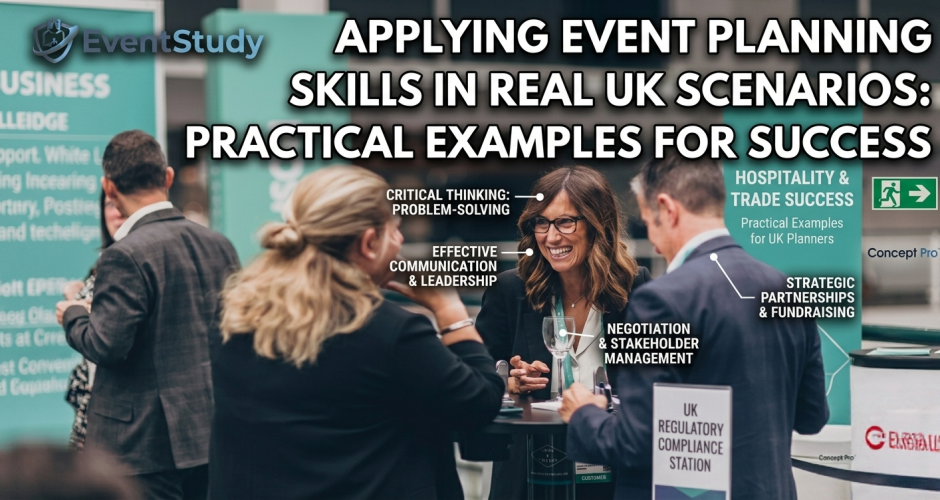
Applying Event Planning Skills in Real UK Scenarios: Practical Examples for Success
-
May 16, 2026
-
Updated: July 20, 2026
- Event Industry Insights
Event planning requires more than creativity and organisation. Real success comes from using those skills under pressure and adapting to different situations. UK events often involve strict regulations, tight schedules, changing weather, and demanding clients.
Strong event planning skills help professionals manage weddings, exhibitions, conferences, festivals, and corporate launches across the UK. Every event brings new challenges. Practical knowledge helps planners stay calm and deliver successful experiences.
What Does Applying Event Planning Skills in Real UK Scenarios Mean?
Applying event planning skills means using practical abilities to solve real event challenges. Event professionals must manage people, budgets, logistics, and unexpected problems while keeping the event organised and successful.
UK events often require planners to balance creativity with legal compliance and operational efficiency. Successful coordinators use planning methods that fit different venues, audiences, and event types.
Understanding Real-World Event Planning
Real-world event planning involves handling tasks before, during, and after an event. Every stage requires decision-making and communication.
Key responsibilities include:
- Creating event timelines
- Managing budgets
- Coordinating suppliers
- Booking venues
- Handling guest communication
- Managing health and safety
- Solving last-minute issues
Professional planners also prepare backup plans for delays, weather changes, or technical failures.
Why UK Event Scenarios Require Practical Skills
UK events face unique operational demands. Large cities experience transport delays and venue restrictions. Outdoor events must prepare for changing weather conditions.
Planners also need awareness of UK regulations and crowd safety expectations.
Important UK event considerations include:
- Health and Safety Executive (HSE) compliance
- Insurance requirements
- Crowd management procedures
- Noise restrictions
- Venue licensing
- Accessibility planning
Strong organisational skills help planners manage these responsibilities without disrupting the attendee experience.
How Communication Skills Help Event Planners Succeed
Communication is one of the most important event organizer skills. Event professionals speak with clients, suppliers, venue teams, sponsors, and attendees throughout the planning process.
Clear communication prevents misunderstandings and keeps projects moving smoothly.
Managing Client Expectations
Clients often have detailed visions for their events. Event coordinators must listen carefully and explain what is realistic within the budget and timeline.
Effective client communication includes:
- Regular planning updates
- Written confirmations
- Clear timelines
- Honest budget discussions
- Quick responses to concerns
Good communication builds trust and strengthens long-term client relationships.
Coordinating Multiple Teams
Large UK events involve several departments working together. Caterers, decorators, AV technicians, security staff, and entertainment teams all need direction.
Strong coordinators:
- Share schedules clearly
- Hold planning meetings
- Confirm supplier deadlines
- Provide emergency contacts
- Keep everyone updated during changes
Good coordination reduces confusion on event day.
Handling Pressure Calmly
Event environments can become stressful very quickly. Guests may arrive early, suppliers may run late, or technical problems may appear suddenly.
Professional event planners stay calm and communicate clearly during difficult situations.
Important pressure-management skills include:
- Fast decision-making
- Positive language
- Active listening
- Team leadership
- Problem-solving
These abilities improve overall event performance.

Why Time Management Is Essential for UK Events
Successful events depend on careful scheduling. Poor time management creates delays, confusion, and unnecessary stress.
Event coordinators must organise tasks weeks or months before the event begins.
Creating Effective Event Timelines
Detailed timelines help teams stay organised. Every supplier and staff member should know their responsibilities and deadlines.
Strong timelines usually include:
- Venue booking dates
- Supplier payment deadlines
- Marketing schedules
- Setup and breakdown times
- Guest arrival plans
- Technical rehearsals
Good planning reduces last-minute problems.
Managing Multiple Deadlines
Event planners often manage several projects at once. Corporate agencies may organise conferences, launches, and networking events during the same month.
Professionals stay organised by:
- Using project management software
- Setting reminders
- Prioritising urgent tasks
- Delegating responsibilities
- Tracking supplier progress
Consistent organisation keeps projects under control.
Allowing Time for Unexpected Delays
UK events regularly face travel disruptions and weather challenges. Smart coordinators always include extra time buffers within schedules.
Examples of common delays include:
- Train cancellations
- Heavy traffic
- Supplier delivery delays
- Technical equipment failures
- Weather-related setup problems
Flexible planning helps teams react quickly without damaging the event experience.
How Budget Management Skills Support Successful Events
Budget control is one of the most valuable skills of an event coordinator. Clients expect high-quality experiences while staying within financial limits.
Careful financial planning protects both the organiser and the client.
Building a Realistic Event Budget
Professional planners create detailed cost breakdowns before confirming suppliers or venues.
Typical event budget categories include:
- Venue hire
- Catering
- Entertainment
- AV production
- Staffing
- Marketing
- Decorations
- Insurance
Accurate budgeting prevents overspending later.
Negotiating Better Supplier Deals
Strong negotiation skills help planners reduce costs while maintaining quality.
Experienced UK event professionals often:
- Compare multiple supplier quotes
- Book venues during off-peak seasons
- Negotiate package deals
- Secure long-term supplier partnerships
- Request flexible payment terms
Good supplier relationships can save significant money.
Monitoring Spending Throughout the Event
Budgets should remain active documents throughout the planning process. Unexpected costs can appear at any stage.
Planners monitor spending by:
- Updating spreadsheets regularly
- Tracking invoices
- Confirming deposits
- Recording last-minute expenses
- Reviewing contract terms carefully
Financial tracking improves decision-making.
Course Suggestion: Event Budget Management Course
The Event Budget Management Course from Event Study teaches you how to plan, track, and control event finances. Learn cost estimation, budgeting, and expense management to deliver successful events within budget.
How Vendor Management Improves Event Operations
Suppliers play a major role in event success. Reliable vendors help events run smoothly and professionally.
Event planners must choose suppliers carefully and maintain strong communication.
Selecting Reliable UK Suppliers
Experienced planners research suppliers before signing contracts.
Important supplier checks include:
- Reviews and references
- Insurance documents
- Experience with similar events
- Equipment quality
- Response times
- Contract transparency
Reliable suppliers reduce operational risks.
Building Strong Vendor Relationships
Positive supplier relationships improve future collaboration. Trusted vendors may provide discounts, faster service, or priority bookings.
Good relationship-building methods include:
- Respectful communication
- Clear payment schedules
- Honest feedback
- Early planning discussions
- Professional behaviour on-site
Long-term partnerships benefit both sides.
Managing Suppliers During Live Events
Event coordinators supervise suppliers throughout setup and event operations.
Responsibilities often include:
- Confirming arrival times
- Checking equipment placement
- Coordinating deliveries
- Solving logistical issues
- Monitoring setup progress
Strong oversight keeps operations organised.
Why Problem-Solving Skills Matter in Event Planning
Unexpected challenges happen during almost every event. Strong problem-solving abilities help planners react quickly and maintain professionalism.
Guests often never notice problems when coordinators respond effectively.
Handling Weather Challenges
Outdoor UK events always face weather risks. Rain, wind, or temperature changes can affect guest comfort and event logistics.
Common weather solutions include:
- Backup indoor spaces
- Covered staging areas
- Weather-resistant equipment
- Emergency communication plans
- Flexible seating layouts
Preparation reduces disruption.
Managing Last-Minute Changes
Event schedules can change suddenly. Speakers may cancel, suppliers may arrive late, or attendance numbers may increase unexpectedly.
Professional planners adapt by:
- Keeping backup suppliers
- Preparing alternative schedules
- Staying calm under pressure
- Maintaining clear communication
- Prioritising critical tasks
Flexibility is essential within event management.
Resolving Technical Problems
Technical failures can affect presentations, entertainment, and attendee engagement.
Event teams prepare by:
- Testing equipment early
- Hiring experienced technicians
- Keeping spare equipment available
- Running rehearsals
- Creating emergency procedures
Preparation helps events continue smoothly.
Which Skills Help Event Coordinators Advance Their Careers?
Modern event professionals need both technical and soft skills to succeed. Employers value coordinators who can lead teams and solve problems confidently.
Continuous learning improves long-term career opportunities.
Developing Leadership Skills
Event coordinators often supervise temporary staff and suppliers during live events.
Leadership abilities include:
- Delegating tasks clearly
- Motivating teams
- Managing conflicts
- Making fast decisions
- Supporting staff under pressure
Strong leaders improve event performance.
Improving Digital Event Skills
Technology plays a major role within modern UK events. Coordinators now use digital tools for registration, communication, and attendee engagement.
Popular event tools include:
- Eventbrite
- Trello
- Asana
- Zoom
- SurveyMonkey
- CRM systems
Digital knowledge improves efficiency and communication.
Building Industry Experience
Hands-on experience remains one of the best ways to improve event planning skills.
Useful experience opportunities include:
- Venue internships
- Volunteer event roles
- Corporate event support
- Festival staffing
- Exhibition coordination
- Freelance assistant roles
Practical exposure builds confidence quickly.
Course Suggestion: Complete Event Planning Course
The Complete Event Planning Course from Event Study covers everything you need to plan and manage events from start to finish. Learn design, budgeting, logistics, and coordination to deliver successful events with confidence.
What are the most important event planning skills?
Communication, organisation, budgeting, time management, leadership, and problem-solving are among the most important event planning skills.
Discover what an event planning coordinator does in the UK with Event Study, including scheduling, vendor management, logistics, team coordination, and event execution.
Why is time management important for event planners?
Strong time management helps planners meet deadlines, coordinate suppliers, and avoid operational delays during events.
How do UK event planners manage risks?
UK planners conduct risk assessments, prepare emergency procedures, and follow health and safety regulations to reduce problems during events.
What software do event coordinators use?
Many event coordinators use tools like Trello, Asana, Eventbrite, Zoom, and CRM systems for planning and communication.
How can beginners gain event planning experience?
Beginners can volunteer at events, complete training courses, assist agencies, or apply for internships within venues and event companies.
Learn the basics of complete event planning in the UK with Event Study, including budgeting, venue sourcing, logistics, vendor coordination, and full event management.
Conclusion
Applying event planning skills within real UK scenarios requires organisation, flexibility, and strong communication. Successful planners manage budgets, suppliers, schedules, and client expectations while adapting to unexpected challenges.
Practical experience helps professionals improve confidence and decision-making over time. Strong event organizer skills allow coordinators to deliver memorable experiences across corporate events, weddings, exhibitions, festivals, and community gatherings.
Sign up to receive our latest updates
Get in touch
Call us directly?
020 8904 8326
Address
63 Cowcross St, Islington, London EC1M 6BP, United Kingdom
info@eventstudy.org.uk
Need some help?
Popular categories