
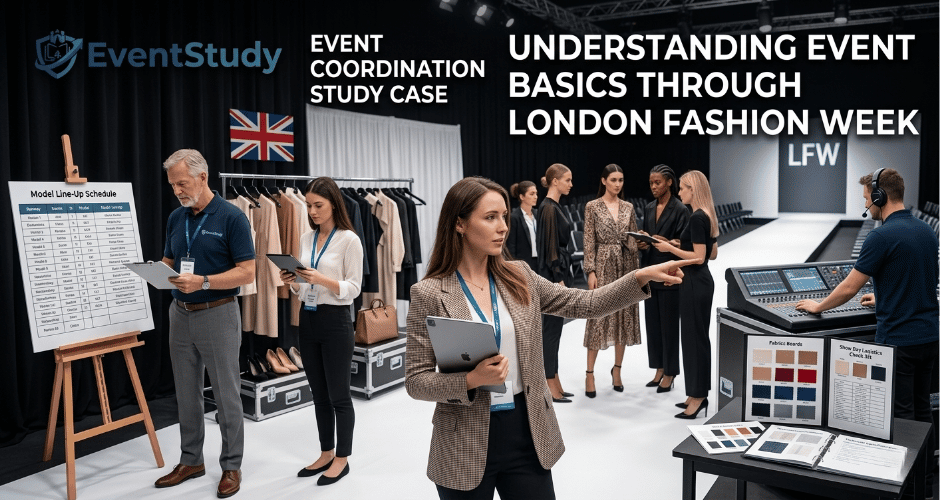
Understanding Event Basics Through London Fashion Week
-
May 2, 2026
-
Updated: July 20, 2026
- Event Industry Insights
London Fashion Week demonstrates that every successful gathering relies on a clear structure and a defined hierarchy. It is not just a series of parties; it is a complex professional ecosystem designed to facilitate trade and media coverage. The event basics showcased here include tiered audience access, strategic venue selection, and the integration of digital and physical experiences. These elements work together to create a cohesive brand narrative that resonates globally.
Organizers use LFW to prove that an event’s “why” must drive its “how.” The primary goal is to provide a platform for designers to secure orders from international buyers. Every logistical choice, from the lighting in a showroom to the security at a runway entrance, supports this commercial objective. Beginners can learn how to manage multiple priorities by observing how the British Fashion Council (BFC) coordinates hundreds of independent stakeholders simultaneously.
What Is the Core Structure of a Global Event?
Major events often use a tiered system to manage different attendee types effectively. This ensures that the right people get the right experience.
Invitation-Only Industry Access
Main runway shows represent the most exclusive tier of the event. These sessions are reserved for accredited press, high-profile influencers, and retail buyers. Restricting access allows the organizers to control the professional environment and ensure that serious business transactions can occur without distraction.
The Hybrid and Digital Reach
Modern events must exist both in person and online. LFW utilizes high-quality livestreams to reach millions of viewers who cannot attend in London. This hybrid approach expands the event’s influence far beyond the physical capacity of the venues.
Public-Facing Engagement
The London Fashion Week Festival provides a gateway for the general public. This ticketed component includes curated shopping experiences and educational panel talks. It allows the brand to generate direct revenue while building a community of fans who feel included in the fashion cycle.
Learn how to become an event manager without a degree in the UK, including practical experience, key skills, and alternative career pathways.
Why Is Location and Atmosphere Strategic?
The physical setting of an event dictates the flow of people and the overall mood of the experience.
Centralized Hubs: Utilizing a main venue like 180 The Strand minimizes travel time for busy professionals. A central hub provides a reliable point of reference for networking and branding.
Immersive Design: Every room is carefully styled to reflect the season’s theme. Whether the focus is on sustainability or emerging talent, the decor serves as a silent communicator of the event’s values.
Neighborhood Ecosystems: Independent pop-ups in areas like Shoreditch create a “fringe” effect. This spreads the event’s energy across the city and allows smaller designers to participate without the high costs of the main schedule.
How Does Stakeholder Management Impact Success?
Events are successful only when the needs of diverse groups are met. Each stakeholder at LFW has a unique set of goals that the organizers must facilitate.
Designers and Brands
These stakeholders need maximum visibility and flawless production. Their goal is to showcase collections and secure orders for the upcoming season. The event must provide them with the technical infrastructure to look their best.
Retail Buyers and Media
Professional attendees require efficiency and access. Buyers need to see the clothes clearly to make financial decisions. Media members need fast internet, good sightlines, and content-ready moments to share with their audiences instantly.
Production Staff and Volunteers
The “engine room” of the event consists of hundreds of workers managing backstage chaos. Success depends on clear communication and a well-defined chain of command. Volunteers often assist with guest seating and logistics, gaining vital industry experience in return.
Marketing, Hype, and Buzz Generation
Events like LFW use specific tactics to stay culturally relevant and financially viable.
Influencer and Street Style Marketing
Hype is generated on the pavement as much as on the runway. Street style photographers capture influencers wearing the latest trends, creating immediate social media traction. This organic coverage provides a sense of urgency and excitement.
Corporate Sponsorships
Partnerships with major brands provide the necessary funding for large-scale production. In exchange, sponsors receive premium branding and access to a high-value audience. These relationships must be mutually beneficial to last over several seasons.
Execution, Logistics, and Post-Event Analysis
The final phase of any event involves the “big day” and the subsequent review of its impact.
Rigorous Timing and Scheduling
Runway shows must follow a strict timeline to avoid a domino effect of delays. Precise logistics are required to move hundreds of guests in and out of a venue in a matter of minutes. Professional staff are trained to handle these high-pressure transitions seamlessly.
Explore planning timelines, crowd management, vendor coordination, transport logistics, and real-world UK event examples to understand seamless event logistics execution better.
Experience Management and Troubleshooting
Security, ticketing, and VIP logistics must work without a hitch. Quick-thinking staff are essential for handling technical glitches or seating disputes. The goal is to ensure the guest experience remains premium regardless of what is happening behind the scenes.
Measuring Results
Success is measured through media reach and commercial volume. Organizers analyze social media data and press reports to gauge the event’s cultural impact. Designers measure success through the number of orders placed by international retailers following their presentations.
Course Suggestion: Events Management Training
The Events Management Training from Event Study gives you the skills to plan, organise, and manage events from start to finish. Learn coordination, logistics, and execution to deliver successful events with confidence.
Conclusion
Understanding event basics through the lens of London Fashion Week reveals the complexity of high-stakes planning. Success is not an accident; it is the result of aligning a grand vision with meticulous logistical detail. By mastering the core pillars of structure, stakeholder management, and safety, you can create experiences that leave a lasting impression. LFW proves that even the most creative industries rely on a solid foundation of professional management. Use these lessons to build your own successful projects and navigate the dynamic world of UK events with confidence.
Frequently Asked Questions (FAQ)
How long does it take to plan a week-long event like LFW?
Planning usually begins the moment the previous event ends. This year-round cycle involves securing venues, vetting designers, and negotiating sponsorships months in advance.
Can anyone attend London Fashion Week?
Most runway shows are invitation-only for industry professionals. However, the London Fashion Week Festival offers tickets to the general public for specific shows and exhibitions.
Learn from the expert guide to exhibition management with Event Study, covering planning, logistics, booth design, vendor coordination, and delivering successful event exhibitions.
What is the role of a volunteer at these events?
Volunteers handle various tasks, including guest registration, backstage assistance, and front-of-house logistics. It is a common entry point for students looking to break into the professional event industry.
How do organizers manage security for high-profile guests?
Security teams work closely with local authorities to manage crowds and protect VIPs. This involves discreet surveillance, bag checks, and strictly controlled access points at every venue.
Sign up to receive our latest updates
Get in touch
Call us directly?
020 8904 8326
Address
63 Cowcross St, Islington, London EC1M 6BP, United Kingdom
info@eventstudy.org.uk
Need some help?
Popular categories