
How to Plan a Successful Conference: A Step-by-Step Guide
-
May 15, 2026
-
Updated: July 20, 2026
- Event Industry Insights
Entering the vibrant world of live experiences offers an exciting professional pathway for thousands of driven individuals each year. The event sector represents a multi-billion-pound powerhouse across the United Kingdom, continuously seeking fresh talent to coordinate memorable corporate functions, weddings, and public festivals. Succeeding in this highly competitive market requires far more than simply possessing a passion for hospitality. Aspiring professionals must blend meticulous administrative control with sharp negotiation skills and robust operational knowledge to survive.
Building a sustainable career path involves navigating numerous educational routes, gaining practical on-site experience, and mastering strict local safety regulations. Many newcomers feel completely overwhelmed by the sheer volume of choices available when launching their career journeys. This guide breaks down the essential industry steps into straightforward, actionable milestones. Read on to discover exactly how to transform your organizational enthusiasm into a thriving, legally compliant professional practice.
Step-by-Step Guide to Planning a Conference
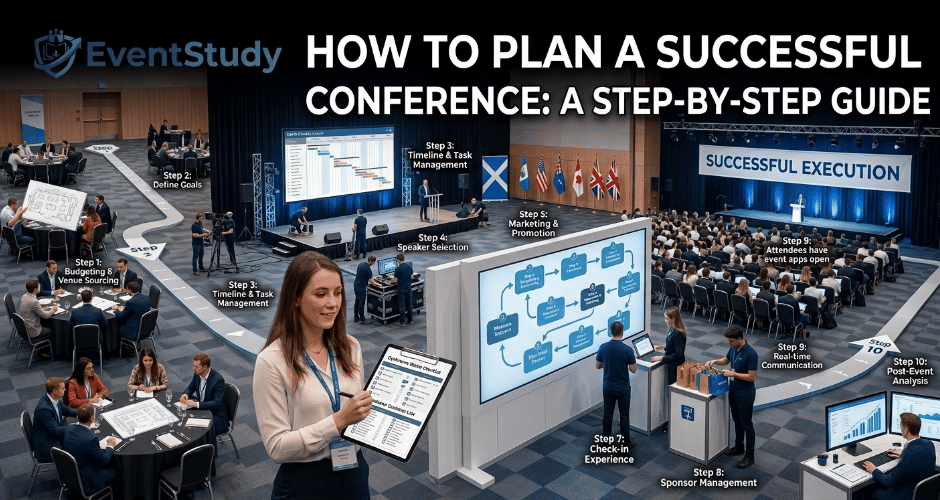
Planning a conference involves a series of logical phases that build upon one another. You must start with a solid foundation before moving into the complex details of vendor management and marketing. Every decision you make should align with the core purpose of the gathering. A systematic approach ensures that no critical detail is overlooked during the months leading up to the event date.
Phase 1: Foundation and Strategy (9–12 Months Out)
Defining your purpose is the absolute first priority for any organiser. Determine if the goal is professional development, industry networking, or academic research. Establish a core team to handle specific areas like marketing, logistics, and speaker liaison. Setting a realistic budget comes next to track projected costs and potential revenue streams. You should include venue hire, catering, technology, and staff expenses in your initial sheet. Selecting the right date and booking a suitable venue must happen early to secure your preferred location.
Phase 2: Logistics and Content (6–9 Months Out)
Securing high-quality speakers provides the draw for your target audience. Finalise keynote presenters and session leaders as soon as possible. Developing the agenda allows you to structure the flow of the day with a mix of workshops and breaks. Approaching corporate partners for sponsorship provides vital funding and in-kind support. You must ensure that the content remains relevant to the needs of your attendees. This phase is about building the intellectual substance of the conference.
Learn how to structure corporate gatherings for long-term value with Event Study, focusing on strategic planning, audience engagement, networking opportunities, and measurable business impact.
Phase 3: Promotion and Setup (3–6 Months Out)
Launching a professional website acts as the central hub for all registration and information. Start your marketing campaign across social media and email lists to build momentum. Locking in vendor contracts for AV technology and catering prevents last-minute availability issues. Monitor ticket sales regularly to adjust your promotional tactics if necessary. Health and safety risk assessments should be completed during this window to meet UK regulations.
What are the Essential Elements of Conference Setup?
Technical and physical arrangements dictate how attendees interact with your content. A poor setup can distract from even the most brilliant speakers.
Mastering Conference Technology and AV
Reliable Wi-Fi is a non-negotiable requirement for modern conference environments. Attendees expect to stay connected and share insights on social media in real-time. Testing your audio-visual equipment prevents embarrassing feedback loops or presentation failures.
You should hire a dedicated AV technician to manage transitions between speakers. Digital signage helps guests navigate the venue without confusion. High-quality lighting sets the right mood and ensures speakers are visible from the back of the room.
Optimising the Physical Layout
Floor plans must accommodate both seated sessions and standing networking breaks. Ensure there is enough space for exhibitors to display their products without blocking thoroughfares. Quiet zones or “work pods” allow attendees to handle urgent business without leaving the venue.
Catering stations should be spread out to prevent long queues during lunch. Comfort is key to keeping people engaged during a full day of learning. Accessible entrances and ramps are mandatory to ensure all guests can participate fully.
How to Manage On-Site Logistics and Execution?
Event day is the ultimate test of your preparation and team coordination. Success depends on your ability to remain calm and handle unpredictable situations.
Managing the Running Order
Creating a minute-by-minute timeline ensures that every session starts and ends on time. This document should be shared with all staff, speakers, and technicians. Briefing your team on the morning of the event clarifies roles and responsibilities.
Someone must be designated to prompt speakers when their time is nearly up. Maintaining the schedule shows respect for your audience’s time. Clear communication channels like headsets or group chats allow for rapid problem-solving.
Attendee Registration and Support
Smoothing out the entry process prevents frustration at the start of the day. Use digital check-in systems to reduce queues and collect accurate attendance data. A dedicated help desk provides a central point for guest enquiries or technical issues.
Ensure your staff are highly visible in branded clothing or badges. Providing printed or digital programmes helps guests manage their own schedules. Personalised name badges facilitate easier networking among participants.
Course Suggestion: Event Planning & Coordination Course
The Event Planning & Coordination Course from Event Study teaches you how to plan, organise, and execute events smoothly. Learn key skills in coordination, timelines, and logistics to deliver successful events with confidence.
Why is Post-Event Evaluation Necessary for Success?
The project is not finished until you have analysed the results against your initial goals. This data is the foundation for improving future conferences.
Collecting and Analysing Feedback
Sending out digital surveys within 24 hours captures fresh impressions from your guests. Ask specific questions about speaker quality, venue facilities, and the registration process. Reviewing these responses helps you identify areas where expectations were met or missed.
Share a summary of the findings with your sponsors to prove the value of their investment. Honest feedback is the most powerful tool for professional growth.
Finalising Accounts and Reporting
Closing the budget involves paying all outstanding vendor invoices and reconciling income. Calculate the final Return on Investment (ROI) to determine the event’s financial success. Holding a team debrief session allows everyone to share their perspective on the execution.
Archive your planning documents and contact lists for future reference. Sharing session recordings or photos on social media keeps the conversation going. This final stage provides closure and prepares you for your next big project.
How to Build a Sustainable Conference Budget?
Financial management is often the most stressful part of organising a conference. Costs can rise rapidly if they are not monitored daily.
Tracking Revenue and Expenses
Projected revenue often comes from a mix of ticket sales and corporate sponsorships. You should set clear milestones for when payments are expected to arrive. Detailed trackers must account for every small expense, including lanyards and printed materials.
Negotiate fixed prices with caterers to avoid surprises based on fluctuating food costs. A contingency fund of at least 10% is essential for emergencies. Transparency with your stakeholders prevents conflict during the final audit.
Maximising Value Through Partnerships
Sponsors can often provide services that reduce your overall cash spend. Trading branding space for AV services or catering is a common strategy in the UK. These partnerships should be documented with clear contracts to avoid misunderstandings.
Value-in-kind deals help you deliver a higher quality experience on a smaller budget. Focus on building multi-year relationships rather than one-off transactions. Strong partnerships create a more stable financial future for your event series.
Learn about the Event Planning Strategy Course with Event Study, covering strategic planning, budgeting, logistics, marketing, and delivering successful events from concept to execution.
Conclusion
Organising a successful conference requires a disciplined approach to both strategy and logistics. You must remain focused on the original goals while managing hundreds of tiny details. Phase-based planning ensures that you have enough time to secure the best speakers and venues. Effective setup and technology integration are the keys to a professional attendee experience. Post-event evaluation provides the data needed to prove your success and improve for the future.
Frequently Asked Questions (FAQ)
What is the best way to choose a conference date?
Check for major industry events and public holidays that might conflict with your schedule. Tuesdays, Wednesdays, and Thursdays are generally the most popular days for business conferences.
How do I find high-quality speakers for my event?
Research industry leaders on LinkedIn or look at speakers from similar conferences. Reach out with a clear value proposition that explains why their expertise fits your audience.
What should I do if a speaker cancels at the last minute?
Always have a contingency plan, such as a backup speaker or a pre-recorded session. You could also extend a popular workshop or host an impromptu panel discussion.
How do I promote a conference on a small budget?
Focus on organic social media engagement and email marketing to your existing lists. Partnerships with industry associations can also help you reach a targeted audience for free.
How many staff members do I need on the event day?
This depends on your attendee numbers, but a general rule is one staff member for every 50 guests. You will need people for registration, speaker support, and general enquiries.
Is virtual attendance still popular for conferences?
Yes, offering a hybrid option allows you to reach a global audience and provides a safety net for travel issues. It also adds a new revenue stream through virtual ticket sales.
Sign up to receive our latest updates
Get in touch
Call us directly?
020 8904 8326
Address
63 Cowcross St, Islington, London EC1M 6BP, United Kingdom
info@eventstudy.org.uk
Need some help?
Popular categories